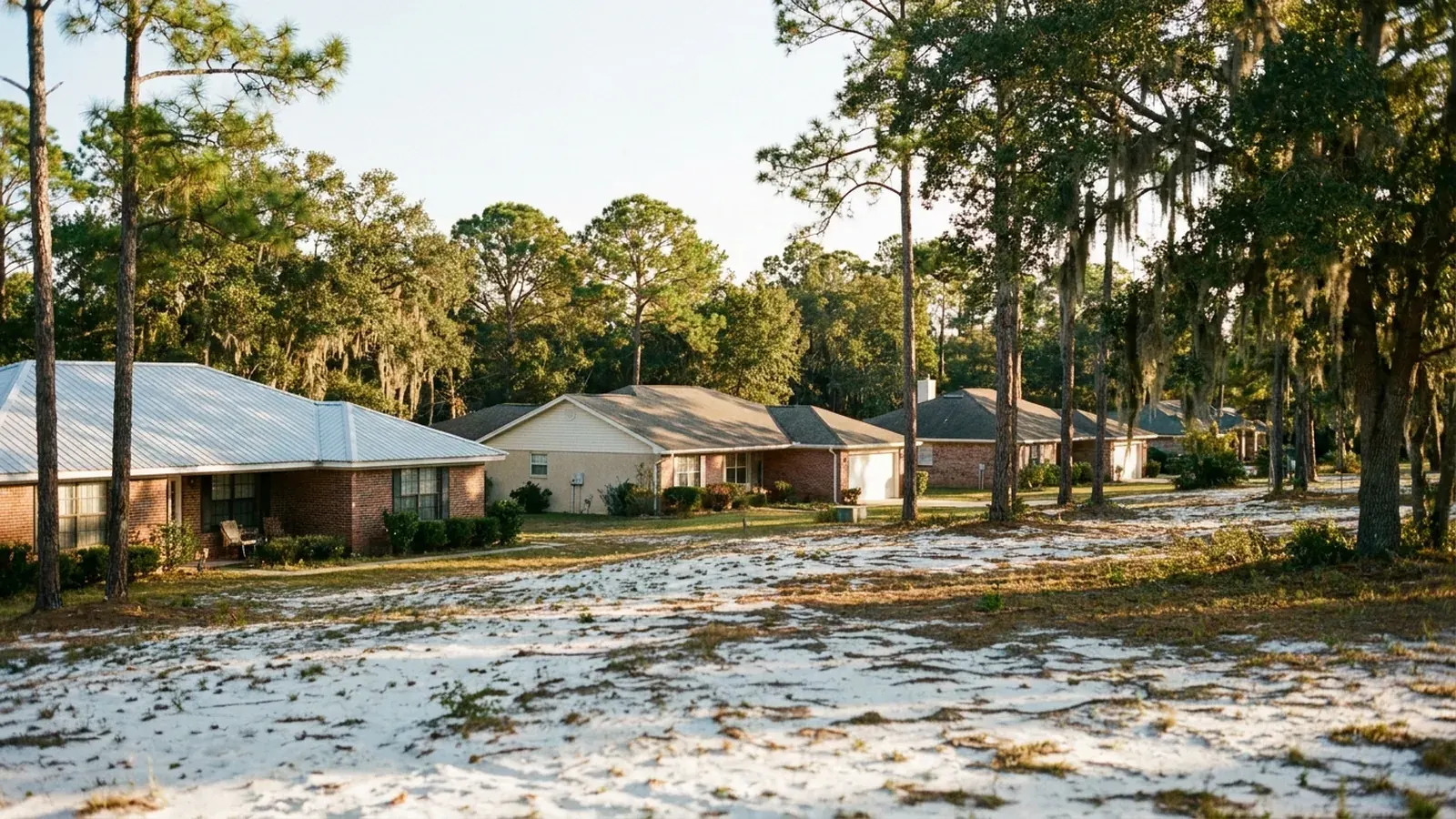
Foundation repair in Pensacola costs $4,000–$15,000, piers $1,200–$3,000 each, void filling $2,000–$9,000. The ground here is sand — it does not swell, it washes away, leaving cavities beneath the slab.
Why that changes the diagnosis, the repair and the quote, and the survey you can run yourself in ten minutes.
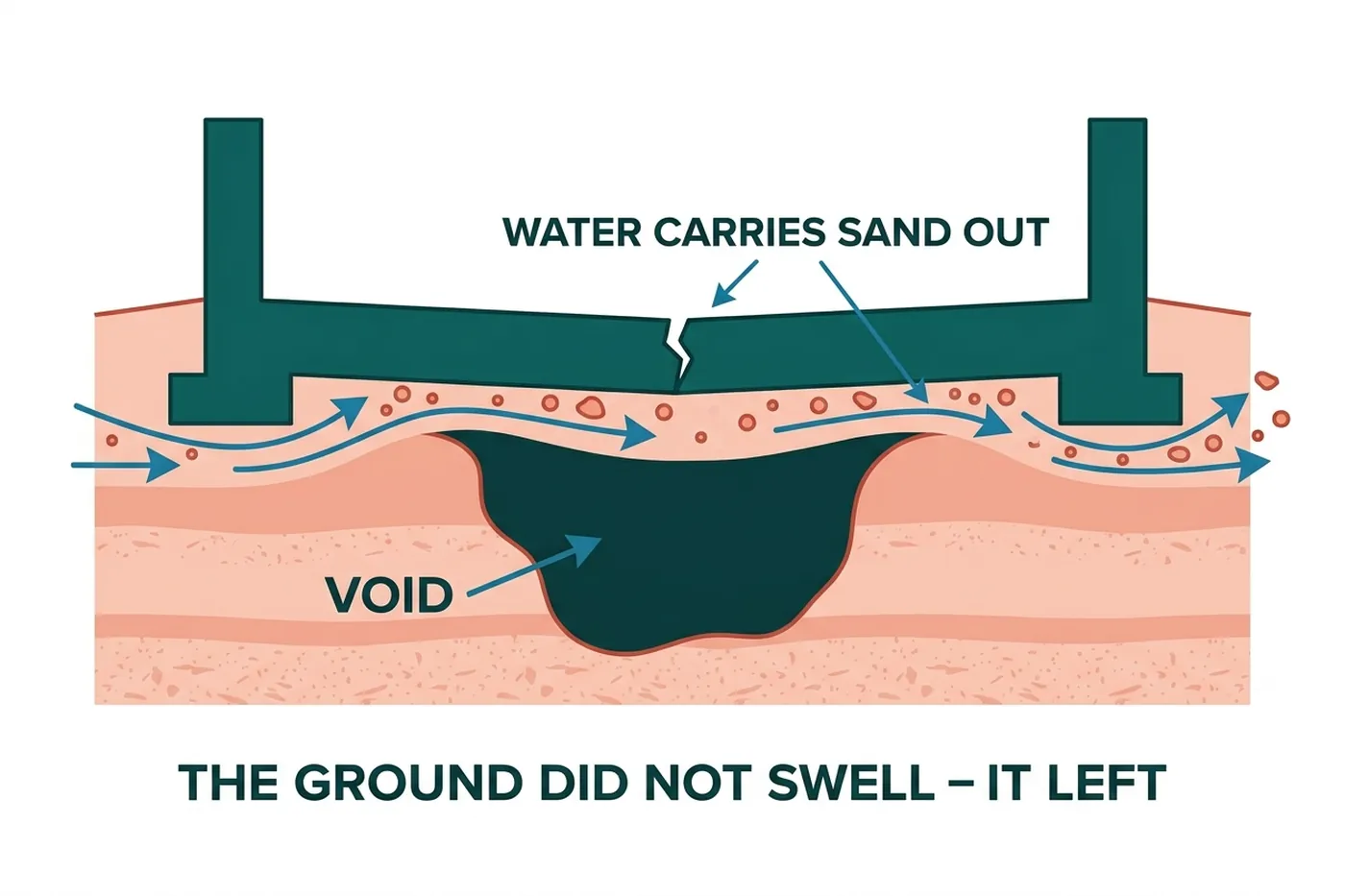
Sand does not swell. It leaves.
Expansive clay markets have a soil that changes size. It takes on water and swells, dries and shrinks, and a foundation rides that cycle. The ground stays where it is.
Pensacola sits on sand, which has essentially no shrink-swell behaviour. What it does is change location. Water moving through it carries the fine material away, and once enough has gone there is a cavity where support used to be. Nothing swelled. Nothing heaved. The ground simply went.
Two consequences run through this entire site: the damage arrives with events rather than seasons, and fixing it means replacing material as well as supporting what is left.
Which makes the date the diagnostic question
On clay, the useful question is whether damage changes between wet and dry seasons, because reversal points at moisture. Here nothing reverses — no season puts washed sand back.
So the question that matters is what happened, and when. A storm, a week of hard rain, a broken line, a neighbour regrading uphill. On 29 April 2014 this city recorded 15.55 inches in a single calendar day, the greatest since records began in 1879, and roughly 20.47 inches over 48 hours. Events like that move ground, and damage frequently surfaces weeks later — which is why people fail to connect the two.
The survey you can run in ten minutes
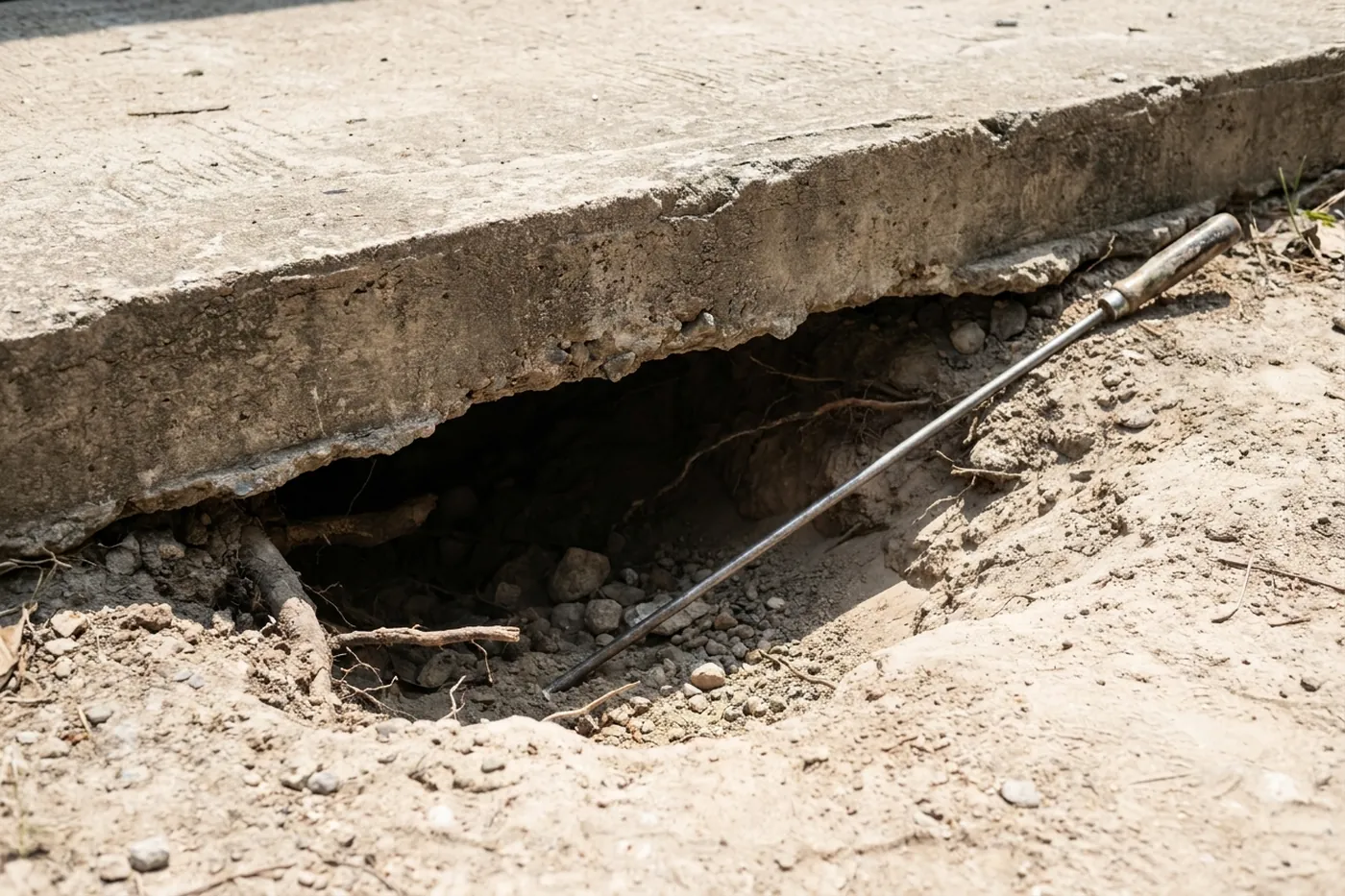
- Walk the house and listen. Slab on ground sounds dead; slab over a cavity drums
- Note where the sound changes — that boundary is the edge of the void
- Check the slab edge outside for a gap opening between concrete and soil
- Look for scour where downspouts discharge
- Look for fan-shaped sand deposits — that sand came from uphill of there
All five are free, and all five find a cavity while it is still a filling job rather than a filling-plus-support job.
What we do
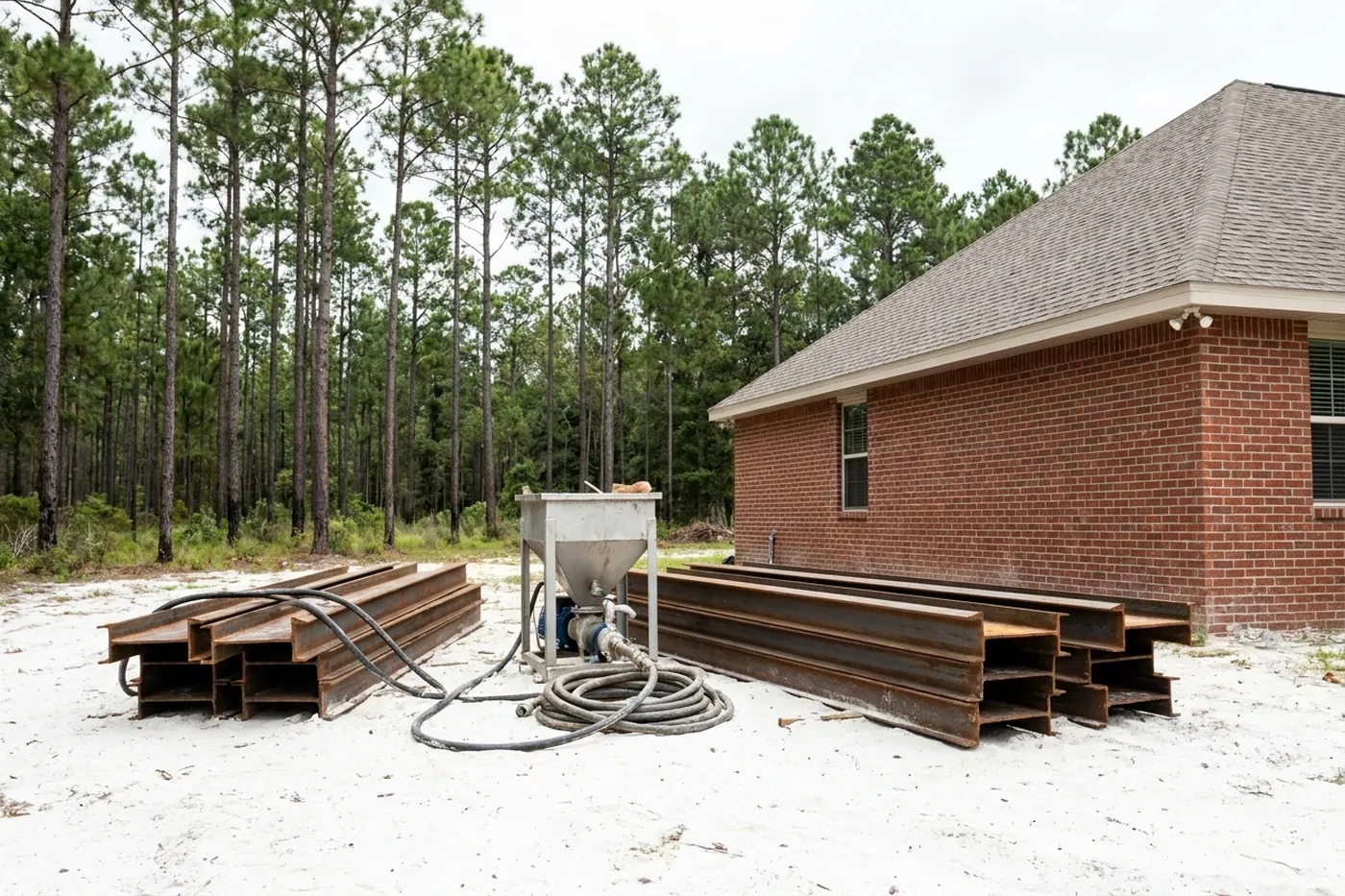
Void Filling & Grouting
When the ground has gone rather than shifted, the hole is the problem and steel alone will not solve it.
Foundation Piering
Carrying load down past material that keeps washing to something that will not.
Slab Foundation Repair
A slab spanning a washout cavity is a bridge nobody designed as one.
Erosion Control & Drainage
On clay you manage moisture. On sand you stop the property physically leaving.
Concrete Leveling
Flatwork drops into the same cavities the house does, and usually announces them first.
Sinkhole or Washout?
Almost always the second one — and the difference decides both the repair and the claim.
Florida Sinkhole Coverage
Mandatory collapse cover exists. It requires your house to be condemned first.
Storm Damage
Fifteen and a half inches in one day, in 2014. This coast moves ground in events.
What it costs
| Work | Range | Applies when |
|---|---|---|
| Void filling | $2,000–$9,000 | Material has gone; slab may still be at elevation |
| Piering | $4,000–$15,000 | The structure has actually dropped |
| Slab repair | $3,500–$12,000 | A slab spanning a cavity, with or without lift |
| Erosion control | $1,500–$6,000 | Always — it is the cause |
| Concrete leveling | $500–$2,500 | Flatwork dropped, house still sound |
Full breakdown, including why support and fill are separate lines, on the Pensacola cost guide.
Where we work
Across Escambia and Santa Rosa counties.
Gulf Breeze · Pace · Milton · Navarre · Cantonment · Molino · Perdido Key · Century · Warrington
Full list on the service areas page.
What a good assessment includes
- Probing and sounding to establish whether a cavity exists and how far it runs
- An exterior walk following where water concentrates, not merely where it pools
- A written scope separating what gets supported from what gets filled
- An assumed fill volume with a rate for material beyond it
- An honest answer when the pattern does not fit washout and you need a geotechnical opinion
Ask to keep it either way. See how we work or book the assessment.
Common questions
How much does foundation repair cost in Pensacola?
Most full repairs run $4,000-$15,000, with piers commonly $1,200-$3,000 each and void filling $2,000-$9,000. Erosion control is $1,500-$6,000. Many local specialists don't charge for the assessment, including probing and sounding for cavities; ask when they call.
Why does the ground here fail differently?
Because it is sand rather than clay. Clay swells and shrinks with moisture and the soil stays put. Sand does neither - water moving through it carries material away, so the foundation loses support because the ground has physically left.
Did my problem start with a storm?
Frequently, and the date is diagnostic. Washout damage arrives with the water that caused it rather than building across seasons. On 29 April 2014 Pensacola took 15.55 inches in one calendar day, the most since records began in 1879.
What does a hollow-sounding floor mean?
Usually that nothing is directly beneath that part of the slab. Walking the house listening for the floor changing note is the cheapest void survey available, and finding a cavity before the slab drops into it is substantially cheaper than afterward.
Do I have a sinkhole?
Almost certainly not. The overwhelming majority of cavities under Pensacola foundations are washout - sand carried off by moving water. True sinkhole activity is a subsurface geological matter for a geotechnical engineer, not a foundation contractor.
Is any of it covered by insurance?
Rarely. Earth movement exclusions typically capture washout even after a named storm. Florida's mandatory catastrophic ground cover collapse coverage requires the building to be condemned and explicitly excludes mere settling or cracking.
Book a Pensacola foundation assessment
The most useful thing you can tell us is when it started, and whether anything happened around then — a named storm, a week of hard rain, a broken line, a neighbour regrading their lot. On sand, damage follows events rather than seasons, so a date is worth more here than a description. A local specialist who works in Pensacola will call you back.