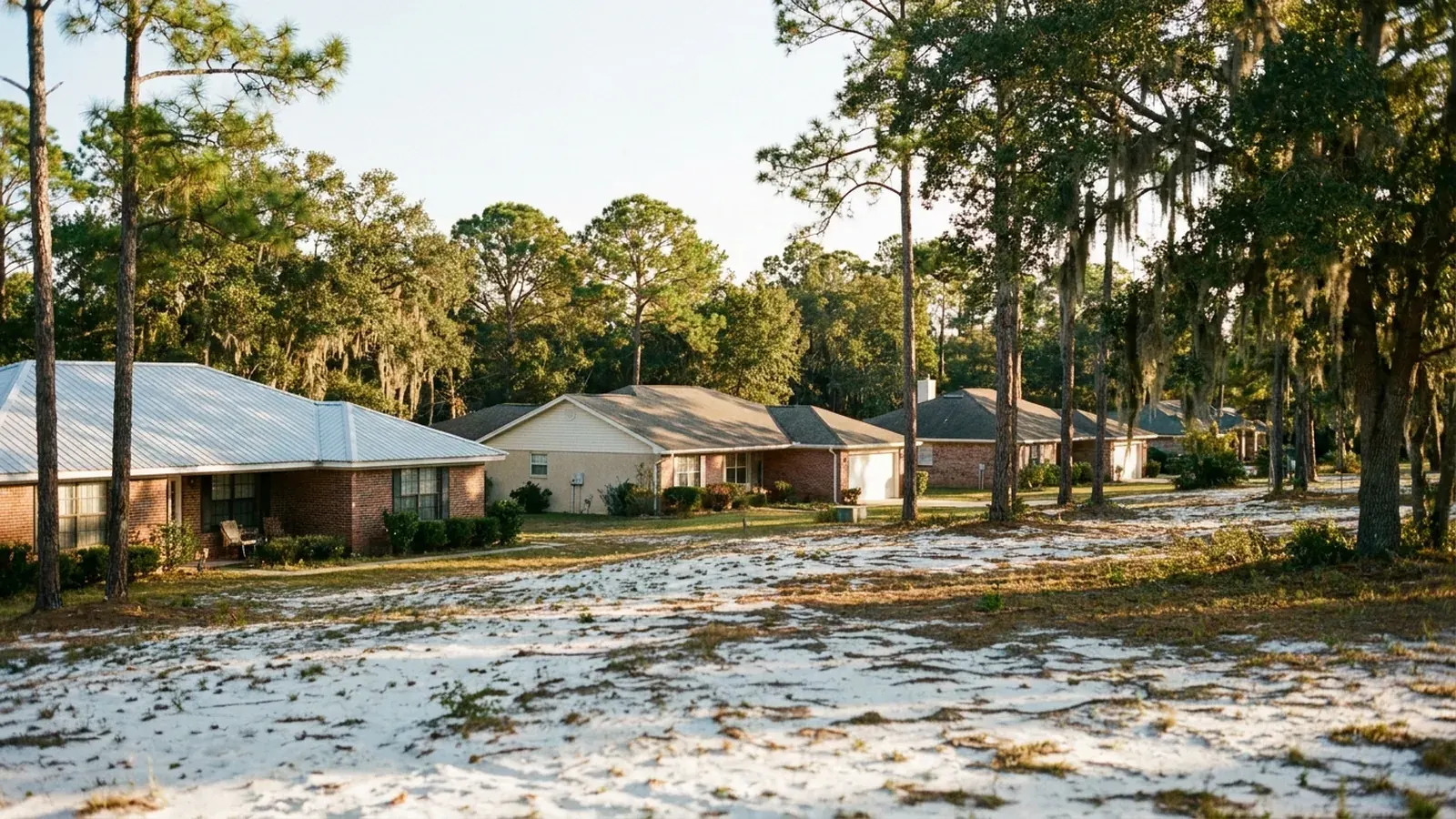
Erosion control and drainage in Pensacola runs $1,500–$6,000. On sand the objective is not moisture content — sand does not swell — it is velocity and path. Slow the water and redirect it, and it stops carrying your lot into the storm system.
Why this is a different job from clay drainage, what to look for after heavy rain, and why it comes first.
A different objective from inland foundation repair
Drainage work on expansive clay is about keeping moisture content stable, because clay changes volume as it wets and dries. The soil stays put; you are managing how much it moves in place.
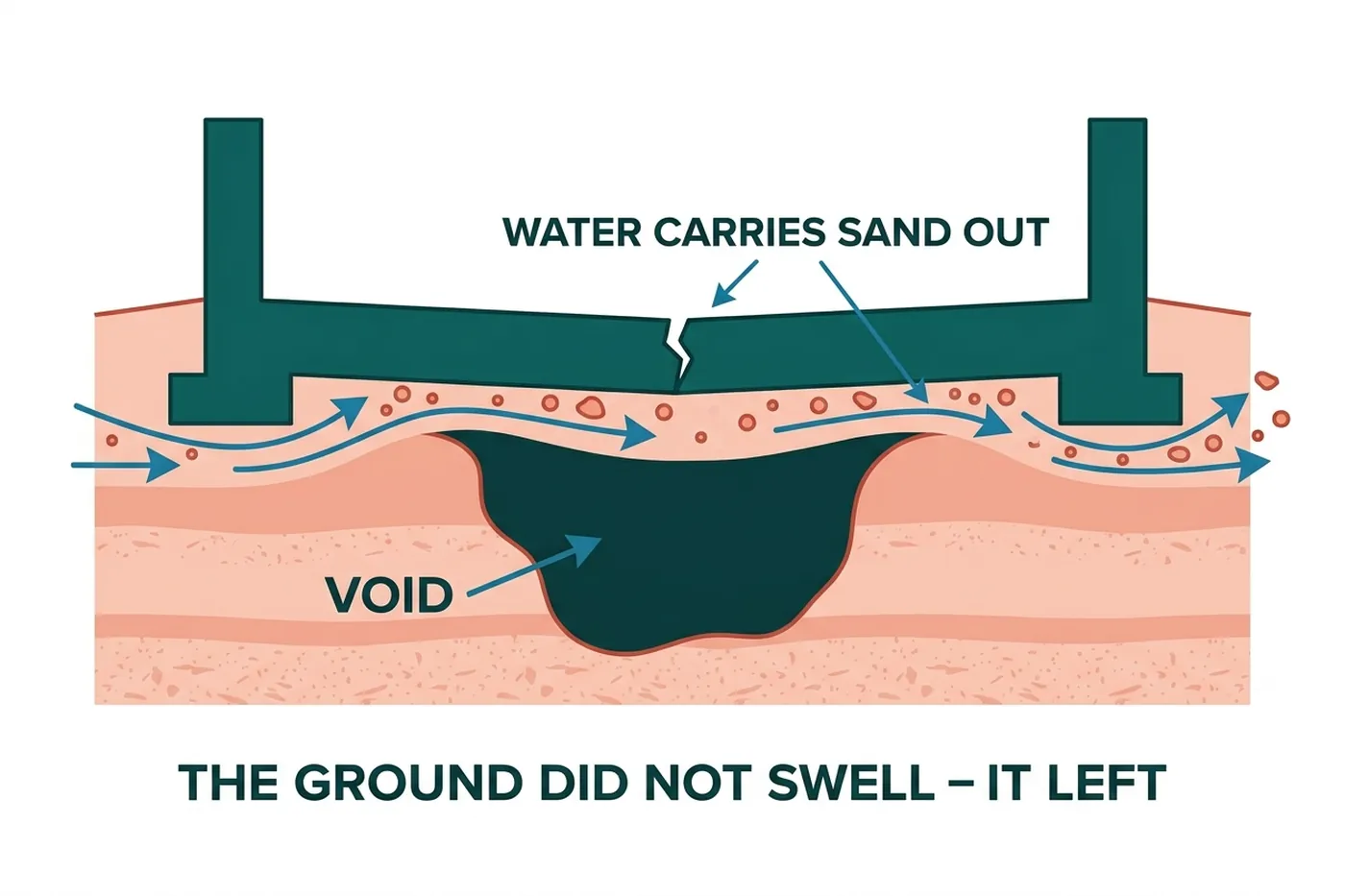
Here the soil does not change size at all. What it does is travel. Water moving through sand at sufficient velocity picks up the fine fraction and carries it off, and everything that leaves has left permanently. So the work is about slowing water down and sending it somewhere harmless, not about keeping the ground at an even dampness.
A contractor applying clay-market drainage logic to a Pensacola lot will do reasonable-looking work that misses the point. Ask what the drainage is meant to achieve, and the answer should be about flow, not moisture.
What to look for after the next hard rain
- Concentration, not pooling. A wide sheet of standing water is doing very little. A narrow, fast channel beside the foundation is doing damage.
- Scour at discharge points. A small crater where a downspout lands is the process in miniature.
- Fan-shaped sand deposits. Wherever sand has been dropped, it came from somewhere uphill of there.
- Exposed roots or small gullies. Both mean material has already gone.
- A gap opening between slab and soil. The ground beside the foundation is retreating.
What the work involves
| Measure | What it does | Typical range |
|---|---|---|
| Extend and disperse discharge | Stops concentrated flow at the foundation line | $200–$800 |
| Regrade and stabilise surface | Spreads flow so velocity drops | $800–$2,500 |
| Intercepting drain with proper outfall | Takes concentrated flow off the lot entirely | $2,500–$5,000 |
| Armour a scour point | Protects where flow cannot be avoided | $400–$1,500 |
| Replace lost material | Imported fill where soil has gone | Priced by volume |
The outfall matters more here than anywhere. A drain that collects water efficiently and releases it at speed a few feet away has relocated the erosion, not stopped it.
Why this comes before any other foundation repair
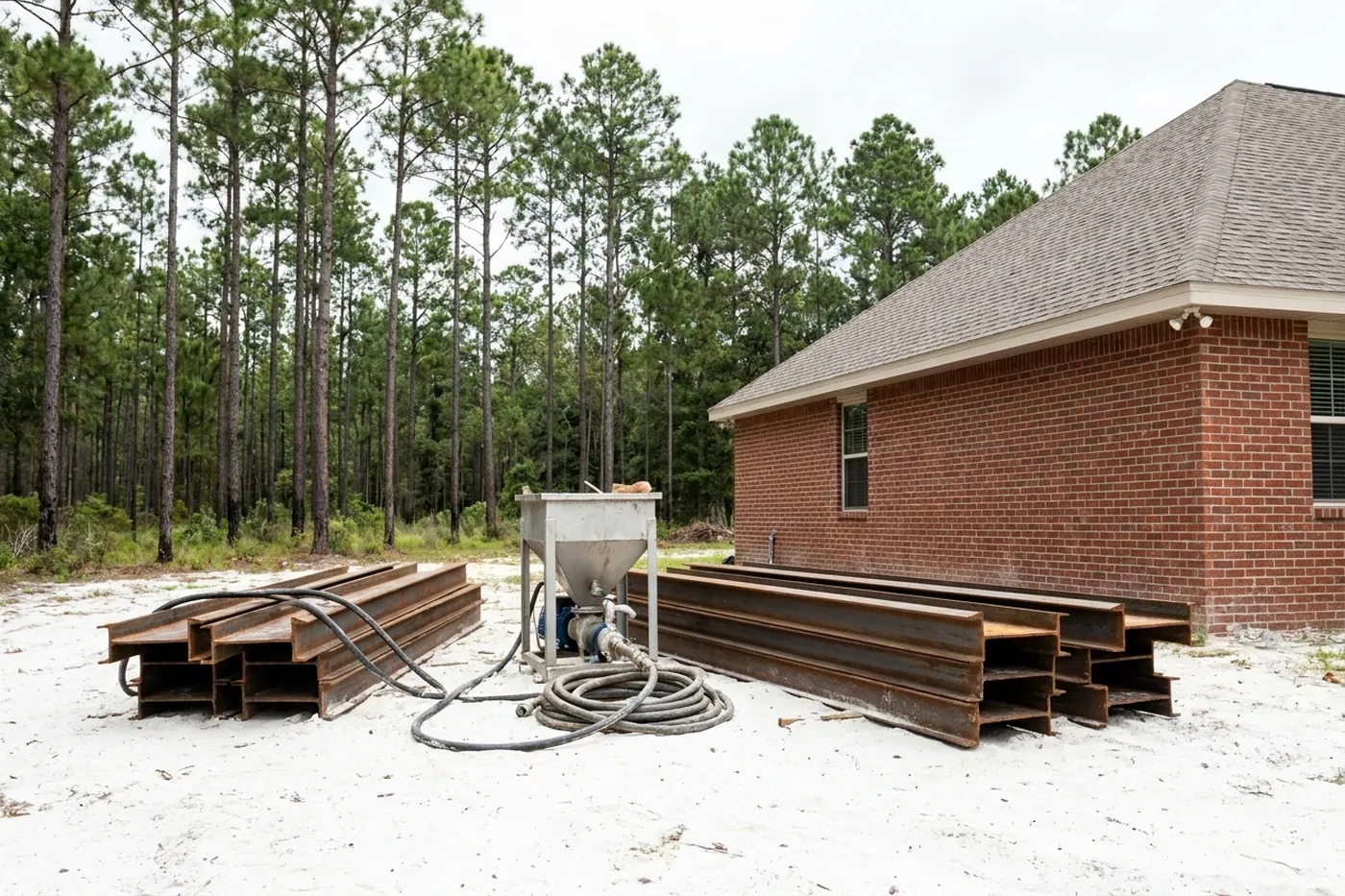
A cavity is a record of a flow. Fill it while the flow continues and you will fill it again. Pier a section while sand keeps moving around the steel and the ground beside the piers keeps going.
Which is why a good scope prices this alongside the structural work rather than as an optional extra — and why, on a house where the readings are still close to flat, this can genuinely be the whole intervention. See the sequence on the cost guide.
Erosion control — the practical answers
What does erosion control cost in Pensacola?
Most work runs $1,500-$6,000 depending on how much water is being handled and where it has to go. Extending discharge and regrading sits at the low end; intercepting a concentrated flow across a lot with a proper drain and outfall sits at the upper end.
How is this different from ordinary drainage work?
On clay, drainage manages how wet the soil gets, because wet clay swells. On sand, the soil does not care how wet it is - what matters is whether water is moving through it fast enough to carry material away. You are controlling velocity and path, not moisture content.
Where does the sand actually go?
Downhill and into whatever the water is draining toward - storm systems, ditches, the bay. It does not come back and nothing puts it back except imported fill. That is why erosion is worth stopping early rather than managing indefinitely.
What should I look at after heavy rain?
Where water concentrates rather than where it pools. A sheet of standing water is doing little; a narrow fast channel beside a foundation is doing a great deal. Look for exposed roots, small gullies, fan-shaped sand deposits, and scour at downspout outlets.
Will controlling the water fix the foundation?
It stops the cause. It does not replace material that has already gone or lift anything that has already dropped. Where a cavity exists it still has to be filled and where the structure has moved it still needs support - but without this step both of those get bought twice.
Book a Pensacola foundation assessment
The most useful thing you can tell us is when it started, and whether anything happened around then — a named storm, a week of hard rain, a broken line, a neighbour regrading their lot. On sand, damage follows events rather than seasons, so a date is worth more here than a description. A local specialist who works in Pensacola will call you back.