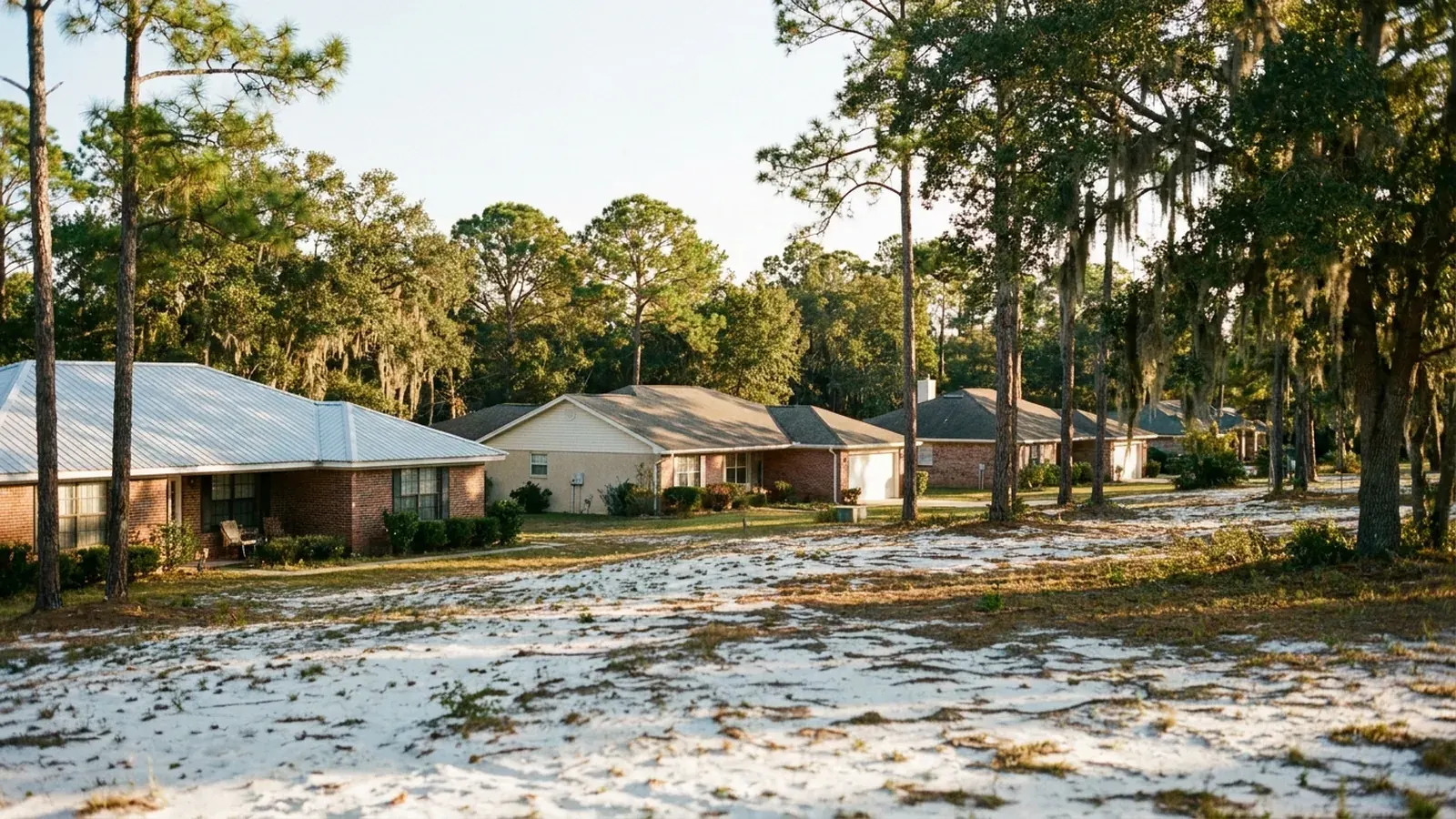
Foundation piering in Pensacola runs $4,000–$15,000, piers commonly $1,200–$3,000 each. On sandy coastal soil the total usually turns on whether void filling is required alongside the steel — two line items for two halves of one problem.
What piering achieves here, why helicals suit sand, and the three things piering explicitly does not do.
What piering achieves in Pensacola foundation repair
Where a structure has actually dropped — not merely lost material beneath it, but moved — the fix is to stop it resting on ground that cannot be trusted. Steel is advanced down past the mobile material until it reaches something that will carry the building, and the load transfers onto that steel.
It is durable, it is well understood, and where the readings show real settlement it is the right purchase. The reason this page spends as much time on limits as on benefits is that on sand, piering addresses one of two failure modes and homeowners are routinely sold it for both.
Why helicals earn their place in sand
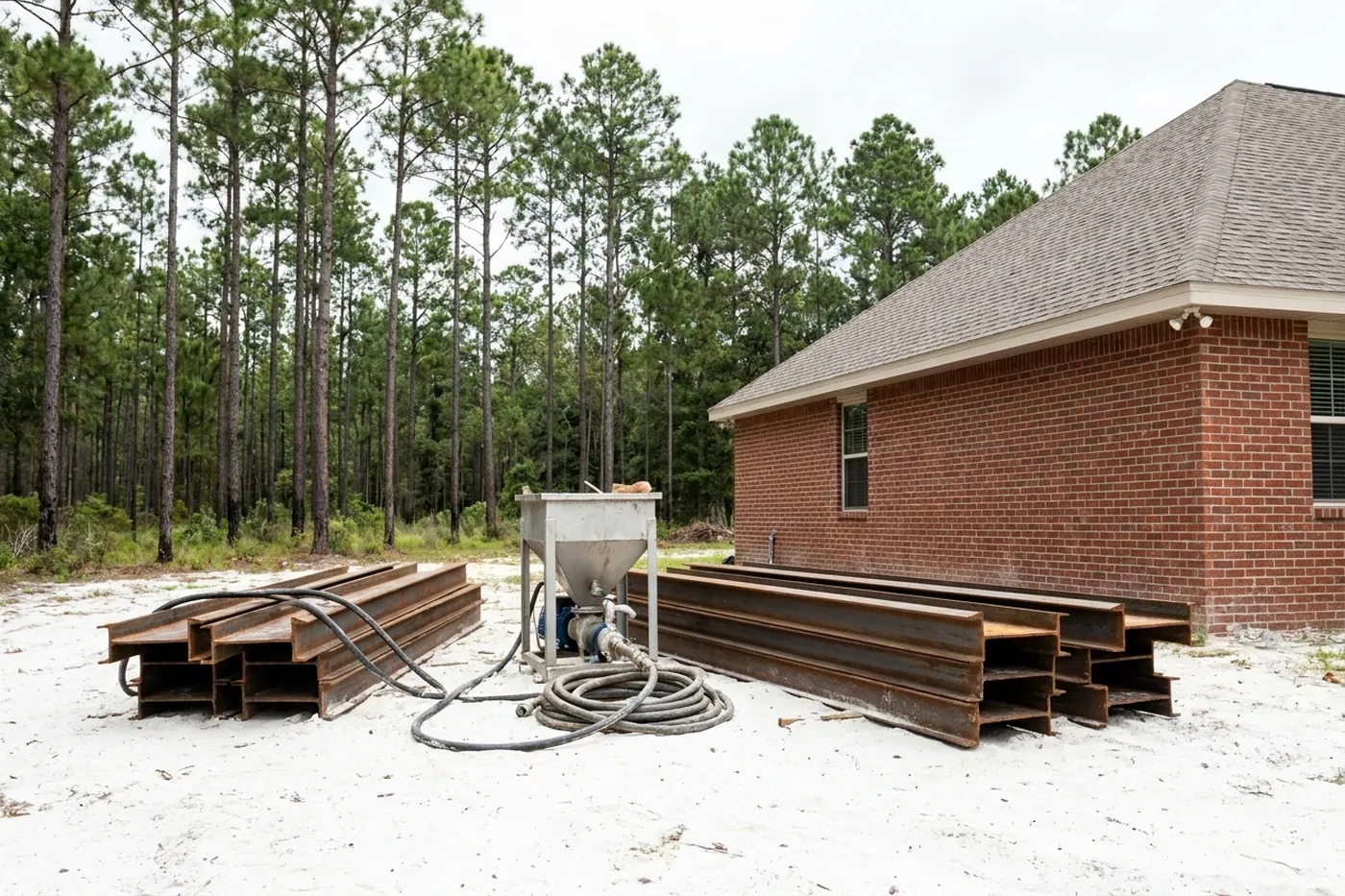
A driven pier is pushed down using the building's own weight until it refuses. On competent clay that refusal is unambiguous. In sand it can be considerably less so — a denser lens can feel like bearing, right up until it is loaded properly.
A helical pier is rotated in to a target torque instead, and torque correlates with capacity. That gives a reading at every stage of the descent rather than a single judgement at the end, which in ground like this is worth the modest extra cost per pier. It is also the only workable option under porches, additions and light framing that cannot provide reaction load.
Three things foundation repair by piering does not do
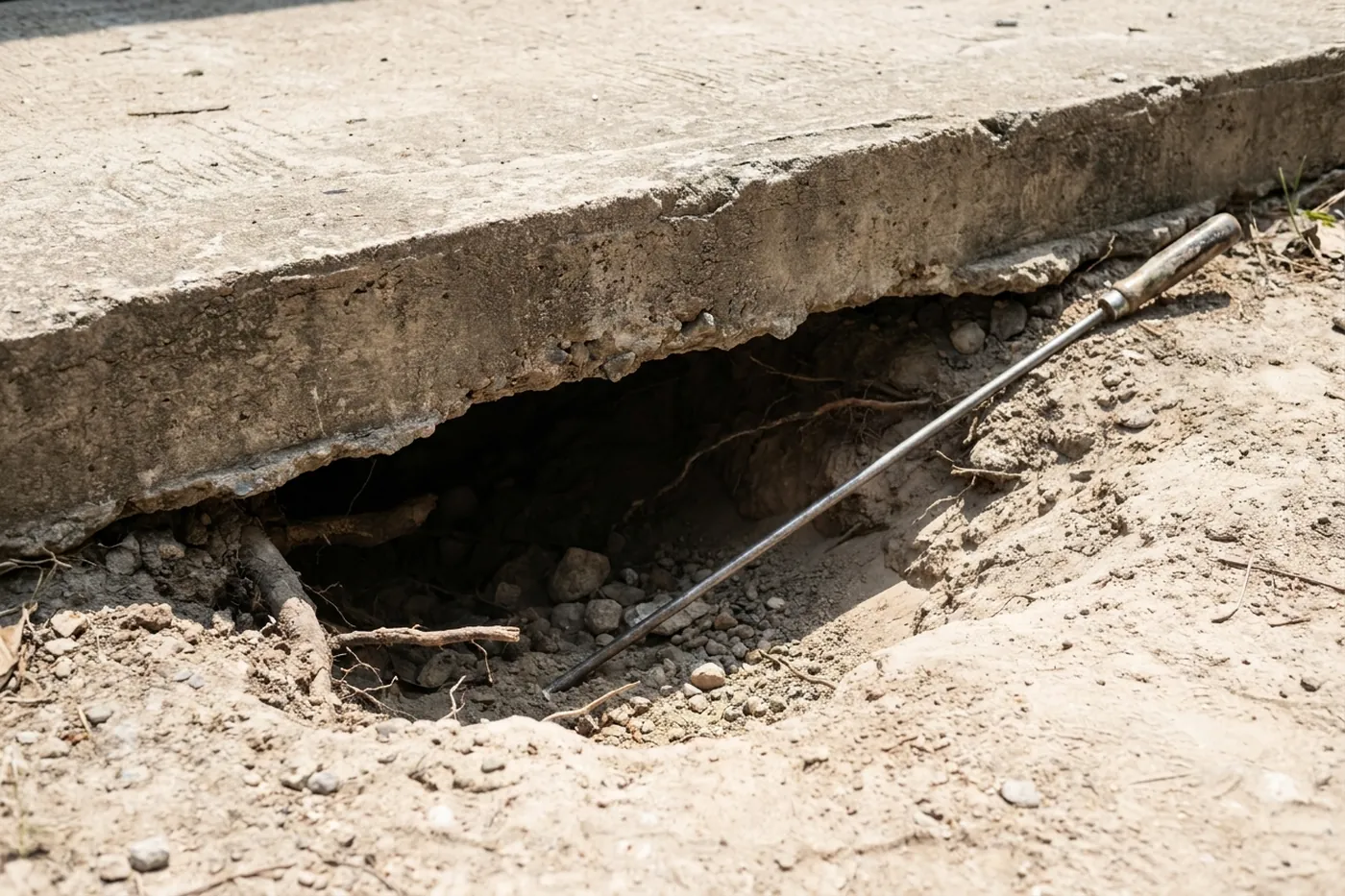
- It does not fill a cavity. Piers occupy points; voids are areas. A slab spanning an unfilled void is still bridging.
- It does not stop erosion. Water will keep moving sand around the piers unless something interrupts the flow — that is a separate scope.
- It does not recover elevation on its own. Lifting is a deliberate decision with its own risks to finishes, and it should be stated in the scope as a target rather than assumed.
What belongs in a Pensacola pier bid
| Line | Why it matters here |
|---|---|
| Stated depth assumption and per-foot rate beyond it | Depth to competent bearing varies and nobody knows it in advance |
| Pier type and, for helicals, the torque target | Capacity in sand is a measurement, not an impression |
| Per-pier log: depth reached and what it landed on | Denser sand is not the same as bearing |
| Whether void filling is included, and at what volume | The half of the job piers do not do |
| Whether erosion control is included | Otherwise the cause is still running |
| Lift target, stated as stabilise or recover | So you know what you bought |
The fourth and fifth rows are the local ones. Inland they would be optional extras. Here their absence is usually why a repaired house moves again. Full pricing on the Pensacola cost guide.
Piering — the practical answers
What does foundation piering cost in Pensacola?
Most full repairs run $4,000-$15,000, with piers commonly $1,200-$3,000 each. On this coast the question that moves the total is usually whether void filling is needed alongside the steel, because those are two different line items solving two different halves of the problem.
How deep do piers go on sand?
Past the material that is being carried away, to something that will hold. That depth varies across the area and is not knowable from the driveway, so a bid without a stated depth assumption and a per-foot rate beyond it is not comparable with any other bid.
Do I need piers or just filling?
It depends on whether the structure has moved or merely lost support beneath it. A slab that has dropped needs support. A slab still at elevation with a cavity underneath needs filling before it drops. Frequently the honest answer is some of each, in different parts of the house.
Push piers or helical piers?
Helicals turn to a target torque, which produces a capacity reading at every stage of the descent - useful in sand, where refusal is rarely crisp and a driven pier can feel like it has found bearing when it has found a denser lens. Push piers suit heavier masonry that can supply the reaction.
Will piers stop the erosion?
Piers won't stop the erosion, and any suggestion otherwise should be treated carefully. Piers transfer load. They do not stop water moving through sand, and the erosion that produced the problem will continue removing material around them unless the flow is interrupted.
Book a Pensacola foundation assessment
The most useful thing you can tell us is when it started, and whether anything happened around then — a named storm, a week of hard rain, a broken line, a neighbour regrading their lot. On sand, damage follows events rather than seasons, so a date is worth more here than a description. A local specialist who works in Pensacola will call you back.