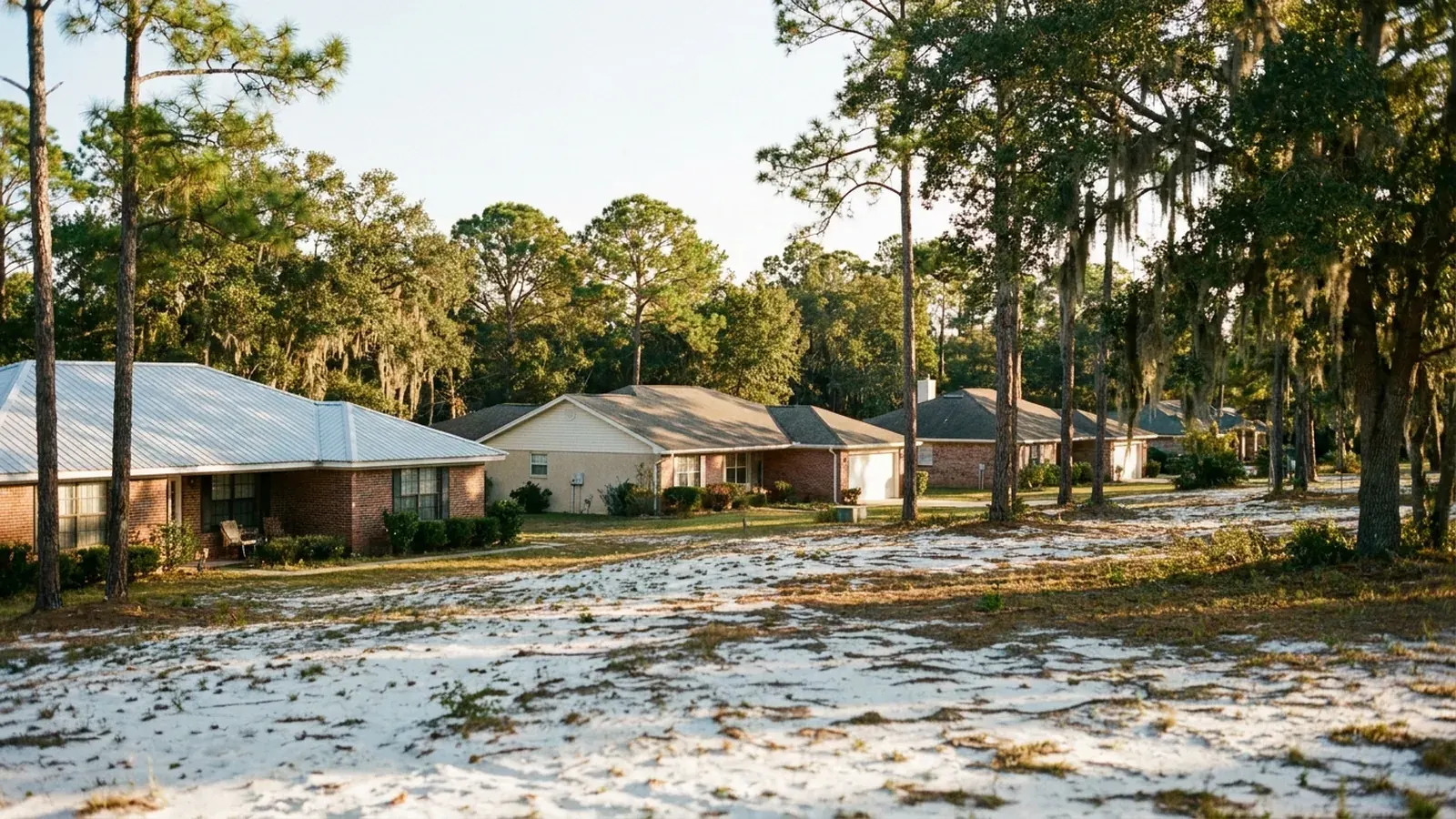
Most cavities beneath Pensacola foundations are washout — sand carried off by moving water — not sinkholes. The distinction changes the repair, changes the insurance position entirely, and is not something a foundation contractor should be certifying either way.
What separates the two, why it matters more for the claim than the repair, and who is actually qualified to decide.
Two different things, one foundation repair question
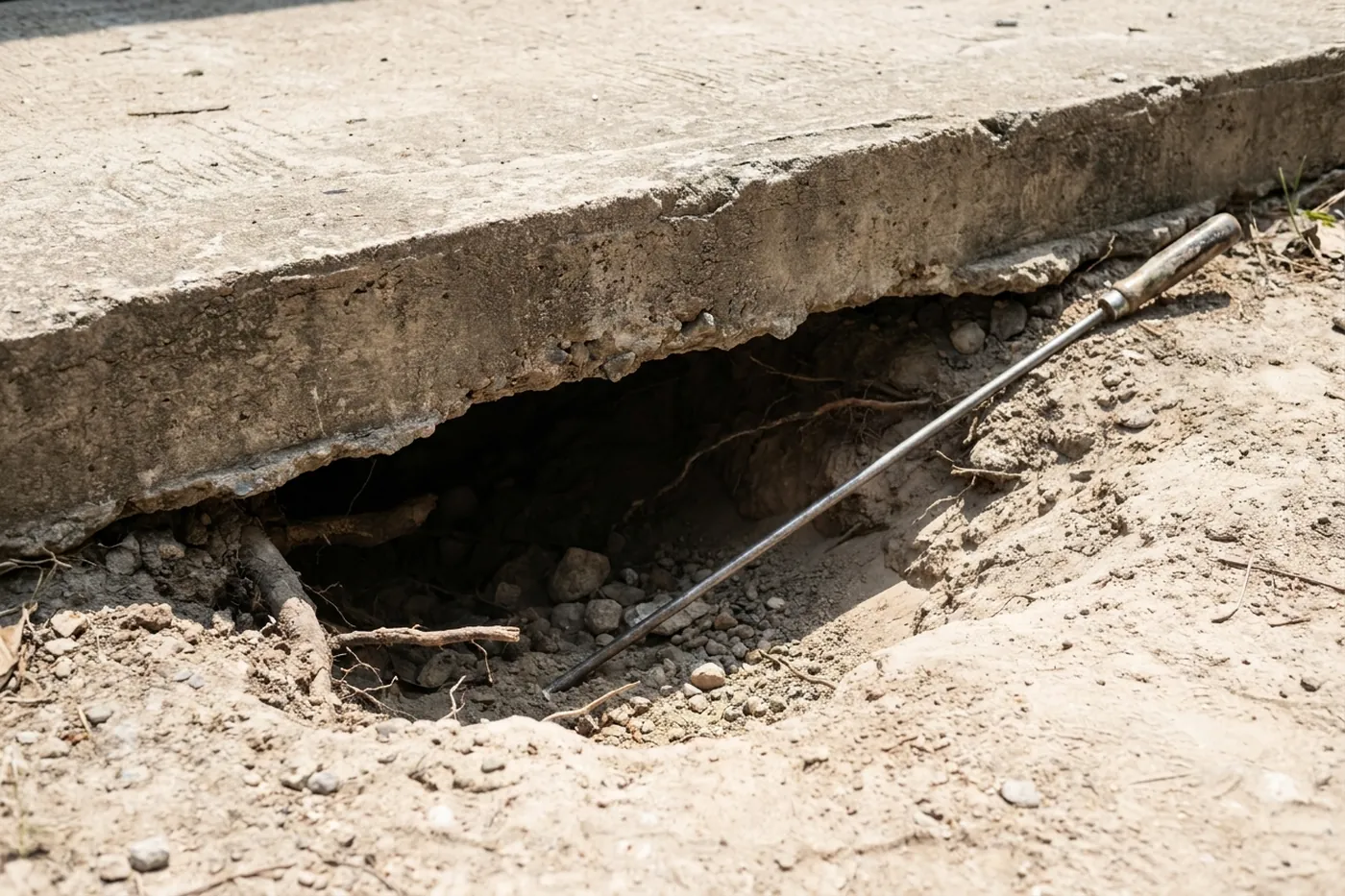
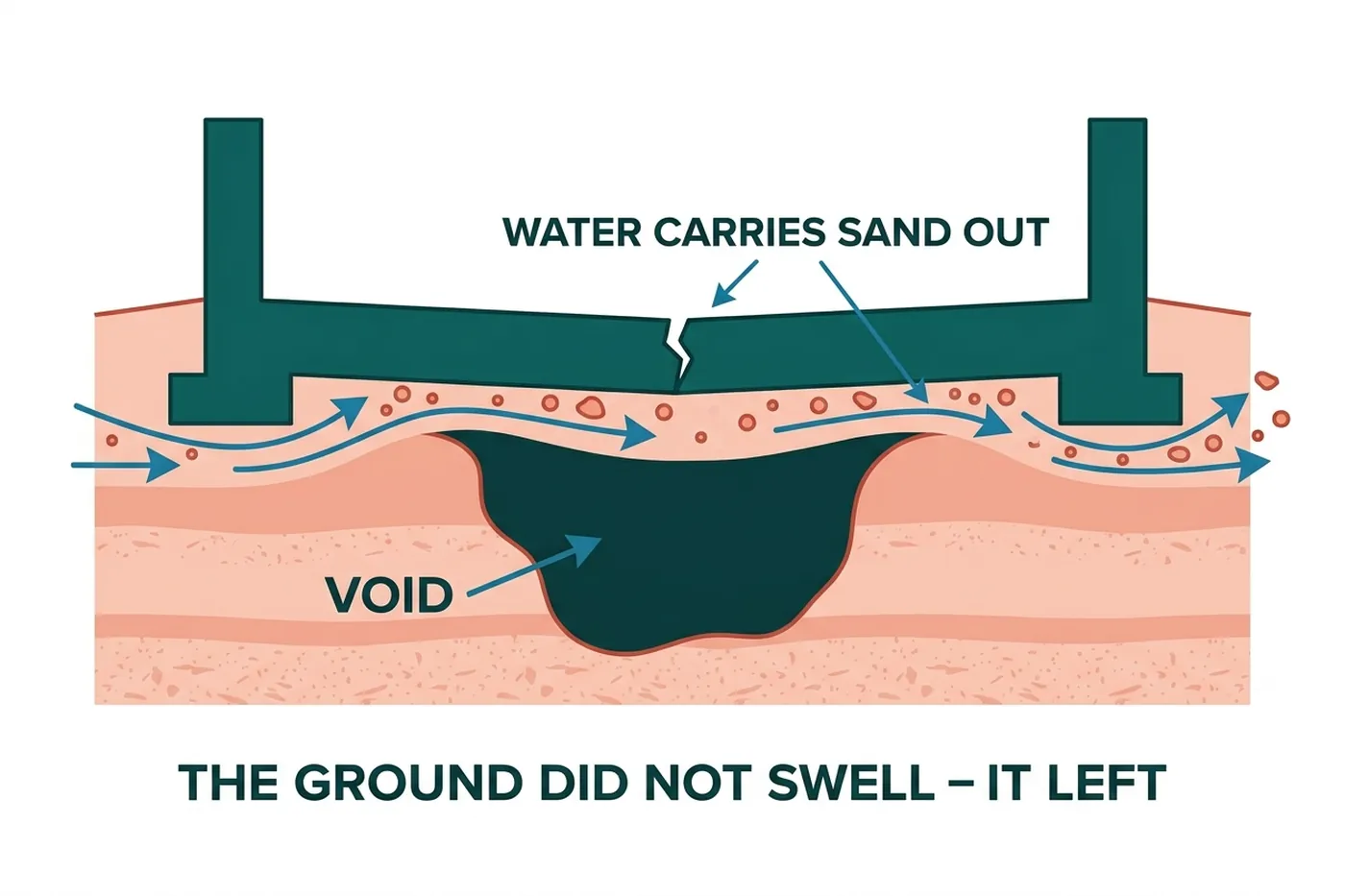
Washout is a surface-water process. Water moves through sand, carries the fine fraction away, and the space left behind is a cavity. It is shallow, it follows a path you can often trace, and it usually correlates with something that happened — a storm, a broken line, a regraded neighbouring lot.
Sinkhole activity is a subsurface geological process involving the material beneath the soil. It is not explained by where surface water runs, and identifying it is geotechnical work involving investigation below the level a foundation contractor works at.
They can produce similar symptoms at the surface, which is why the anxious search happens. They are not similar problems.
What points which way
| Observation | Consistent with |
|---|---|
| Appeared after heavy rain or a named storm | Washout |
| A traceable water path leads to it | Washout |
| Located at a discharge point or a scour channel | Washout |
| Shallow, and the slab sounds hollow above it | Washout |
| No surface water explanation at all | Warrants geotechnical investigation |
| Circular depression, ground visibly subsiding | Warrants geotechnical investigation |
The bottom two rows are where a foundation contractor should stop and tell you to bring in someone else. We are not geologists, foundation contractors do not have the equipment to investigate what is happening below the soil, and a foundation company that offers you a definitive answer on sinkhole activity from a driveway inspection is selling certainty it does not possess.
Why the classification matters more than the foundation repair
Washout repair is straightforward: fill the cavity, interrupt the flow, support anything that has actually dropped. It is well understood and routine.
The insurance consequences are where the difference bites. Washout is generally handled as earth movement or a maintenance matter and excluded from standard cover. Sinkhole losses in Florida sit inside a separate statutory framework with its own definitions, deductibles and dispute process — set out on the sinkhole coverage page, where the detail is considerably less generous than most homeowners assume.
What a foundation specialist can and cannot tell you
A good specialist will tell you when a cavity fits the washout pattern, when a water path explains it, and what it costs to fix, and when something does not fit that pattern and you need a geotechnical opinion before anybody injects material into the ground.
What no foundation contractor should do is certify that you do not have a sinkhole. That is not within their competence and the reassurance would be worthless. If a contractor offers it, treat that as information about the contractor.
Only one of the two is a foundation repair job
Washout is. A cavity opened by water carrying sand away gets filled, the flow that carried it gets interrupted, and support goes in where the structure has genuinely dropped. That is ordinary work with known prices and a known sequence.
Sinkhole activity is not, and the distinction is not a technicality. Injecting material into a subsidence feature nobody has investigated can make the situation worse rather than better, and it puts a foundation contractor in the position of treating something they are not licensed to diagnose. Where the pattern does not fit washout, the correct next call is a geotechnical engineer or a professional geologist, and it is worth making before anybody quotes you a repair.
Sinkholes and washout — the practical answers
Do I have a sinkhole under my house?
Statistically, almost certainly not. The overwhelming majority of cavities found under Pensacola foundations are washout - sand carried away by moving water. A sinkhole is a specific geological phenomenon involving collapse of underlying rock, and it is far rarer than the anxiety around it suggests.
How can you tell the difference?
Washout tends to be shallow, follows a water path, and correlates with a rainfall event or a drainage feature. True sinkhole activity involves the ground beneath, is not explained by surface flow, and its investigation is geotechnical work rather than something a foundation contractor determines.
Who decides which one it is?
For anything ambiguous, a geotechnical engineer or professional geologist - not us. A foundation specialist can tell you when the pattern clearly fits washout and a water path explains it. They cannot certify the absence of a sinkhole, and a foundation contractor claiming to has overstepped.
Does it change the repair?
Substantially. Washout is filled and the water interrupted. Suspected sinkhole activity needs geotechnical investigation before anybody injects anything, because remediation design depends on what is happening below and grouting into an active feature without that understanding is not sound practice.
Does it change the insurance?
Enormously. Washout is generally treated as a maintenance or earth movement matter and excluded. Sinkhole coverage in Florida is a separate statutory regime with its own tests and deductibles. Getting the classification right is worth more than any repair discount.
Book a Pensacola foundation assessment
The most useful thing you can tell us is when it started, and whether anything happened around then — a named storm, a week of hard rain, a broken line, a neighbour regrading their lot. On sand, damage follows events rather than seasons, so a date is worth more here than a description. A local specialist who works in Pensacola will call you back.