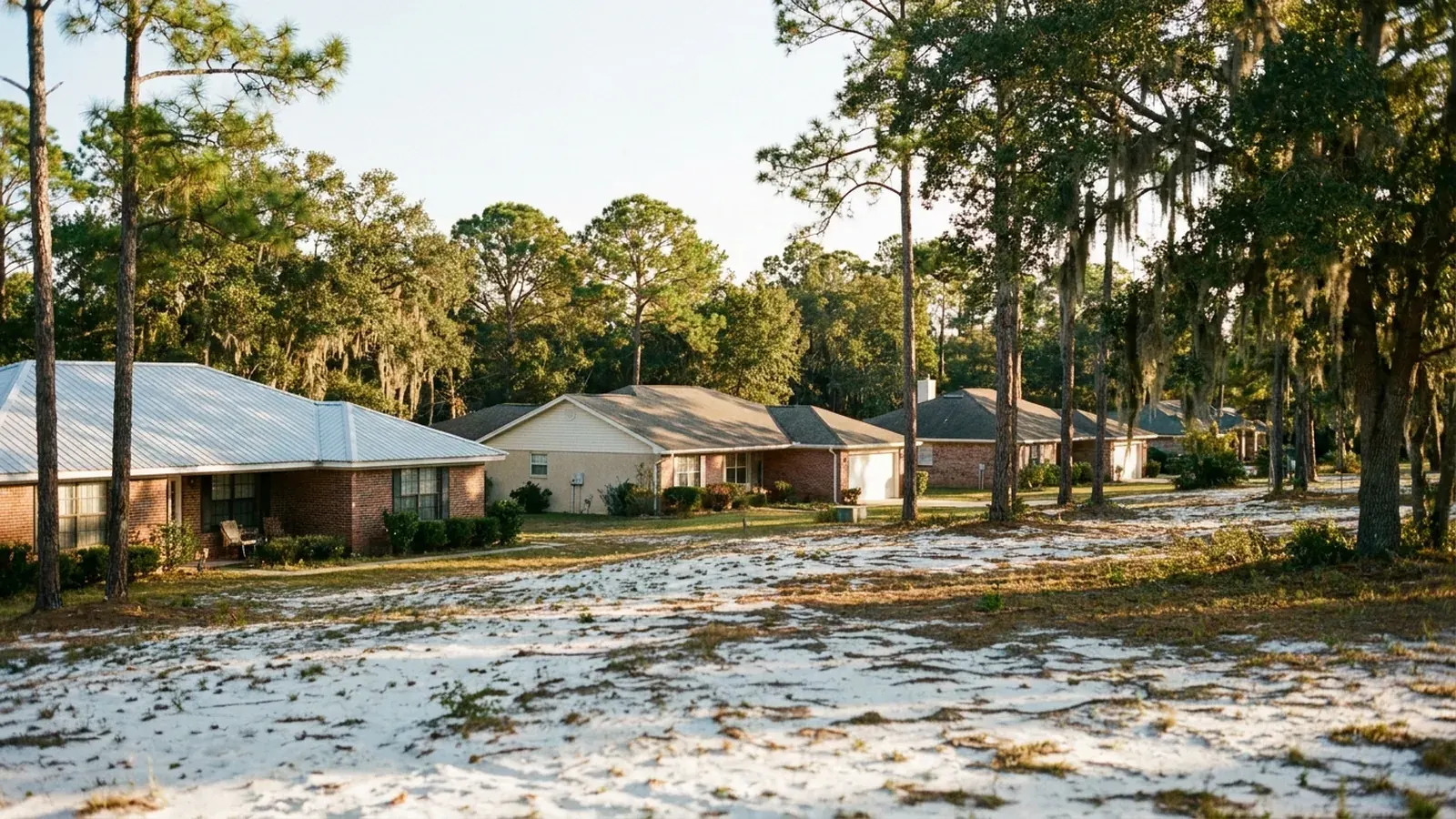
Slab foundation repair in Pensacola runs $3,500–$12,000. The variable is how much of the slab is spanning a cavity rather than resting on ground — filling that space and supporting the perimeter are different operations, and a slab often needs both.
Why a hollow sound is the cheapest survey you own, what a spanning crack looks like, and why the date matters more than the width.
Listen before you look
A slab resting on ground sounds dead. A slab with nothing beneath it drums. Walking a house in socks, or tapping across the floor, will often map a cavity more usefully than staring at a crack — and it costs nothing.
Pay attention to where the sound changes rather than to the loudest spot. The boundary between solid and hollow is the edge of the void, and knowing roughly where that runs before anyone arrives shortens the assessment considerably.
A spanning crack looks different
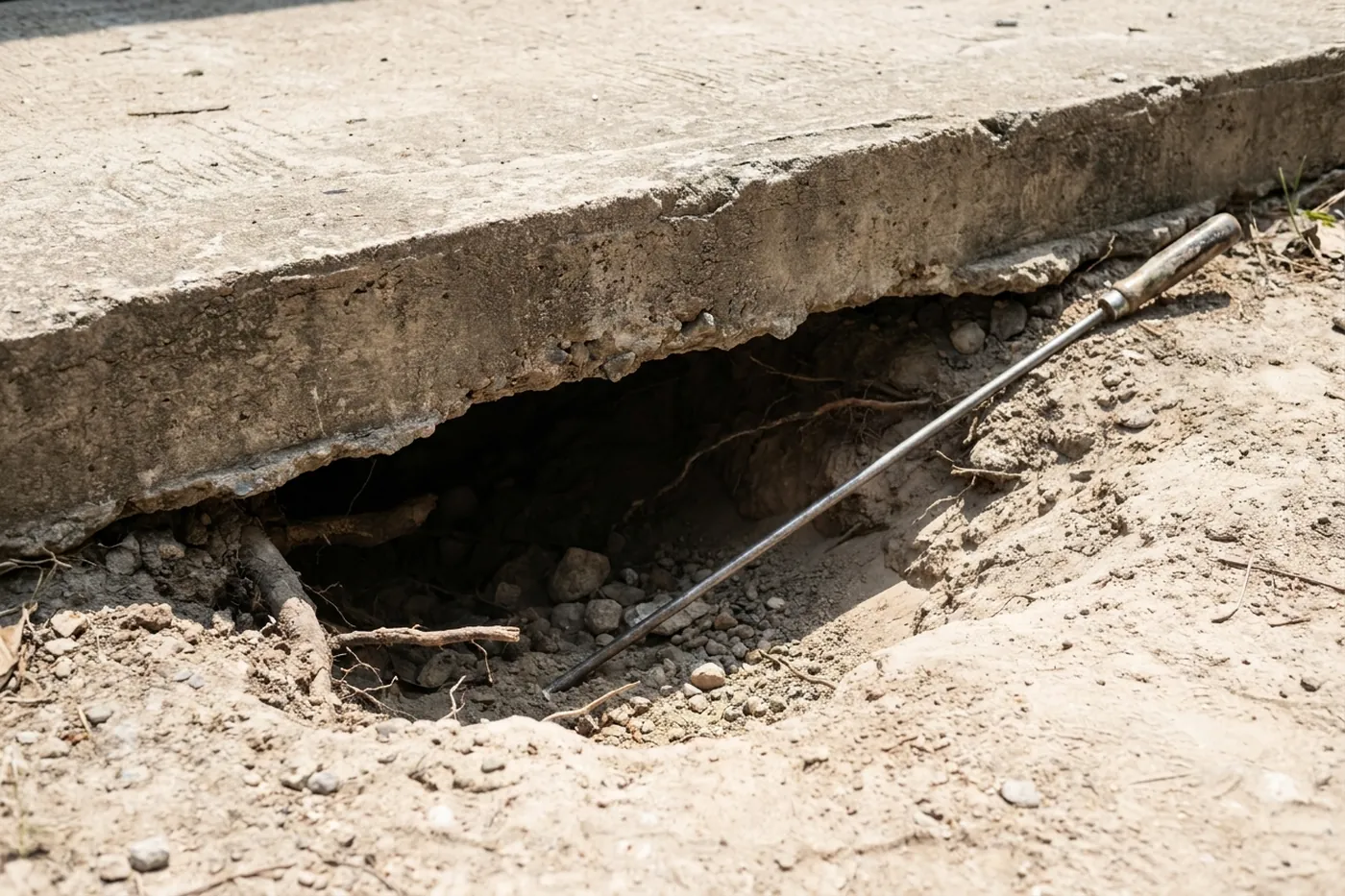
Concrete cracks when it is asked to carry something it was not designed for. A slab bridging an unsupported area is doing exactly that, and the crack tends to run along the edge of the unsupported zone rather than wandering.
Two features distinguish it from ordinary shrinkage cracking. It usually appeared or widened after a specific water event rather than gradually. And it does not close again — there is no seasonal recovery, because nothing is going to put the sand back.
What drives the price
| Situation | What the work involves | Typical range |
|---|---|---|
| Small cavity, slab still at elevation | Fill only, before it drops | $2,000–$4,000 |
| Cavity plus a dropped section | Fill and controlled lift | $4,000–$8,000 |
| Dropped edge, ground unreliable below | Perimeter piers plus fill | $8,000–$12,000 |
| Movement across most of the footprint | Full underpinning and fill | $12,000–$15,000+ |
| Cracks static, no hollow areas, no recent event | Cosmetic repair only | $400–$1,500 |
The first row is the one worth acting on. A cavity found before the slab drops into it is substantially cheaper than the same cavity found afterward, and the hollow sound is what gives you that warning.
Lifting and filling are often one operation
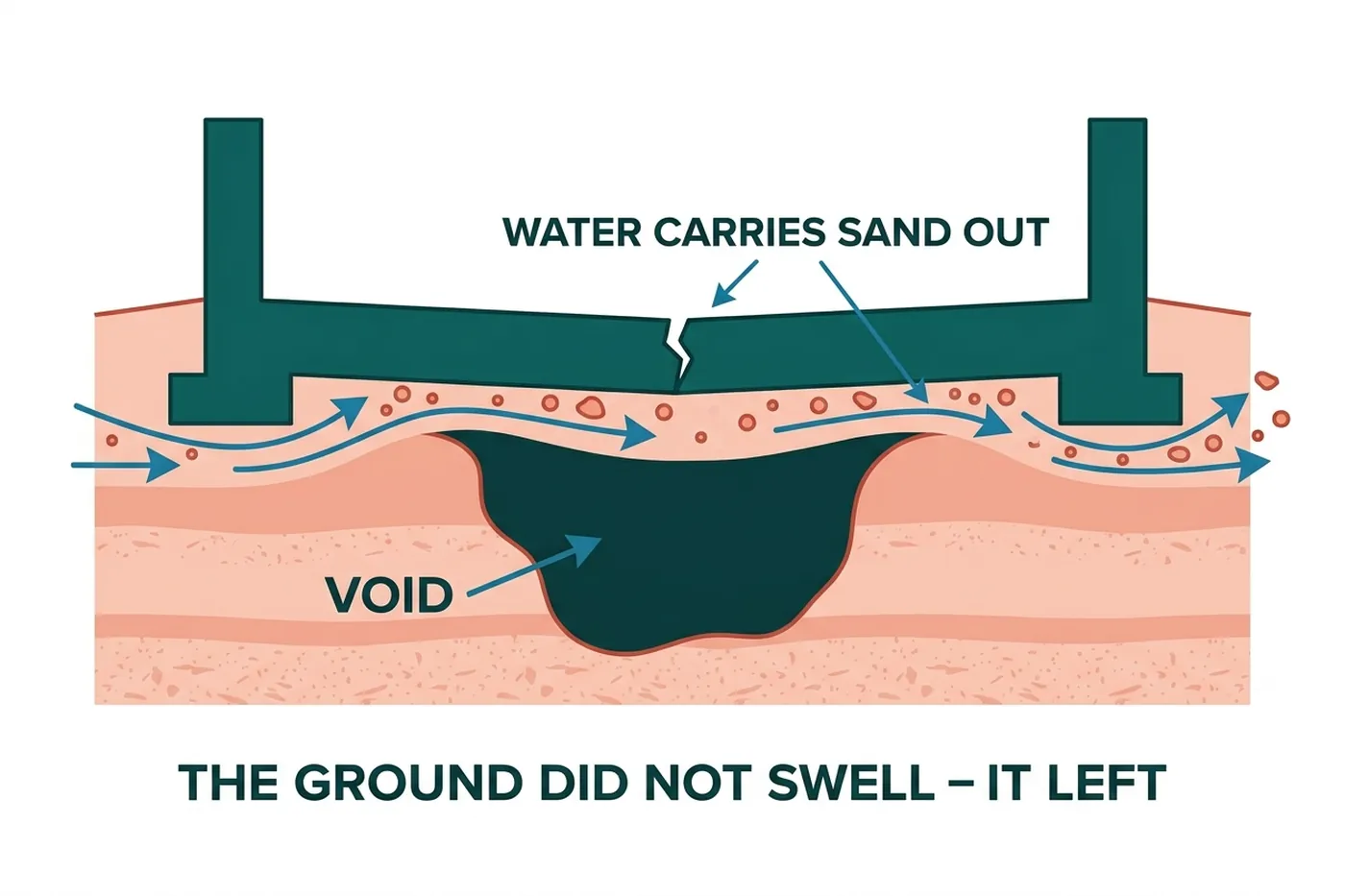
Where material is injected under a slab, it can both fill the space and raise the concrete. That is efficient and it needs care: pressure sufficient to lift one section can crack an adjacent one, and tile or stone laid while the floor was out of level can suffer as it comes back.
So the scope should say whether it is targeting fill only or fill and a defined amount of lift. Those are different jobs with different risks, and finding out which one you bought afterward is the wrong time.
Slab repair — the practical answers
What does slab foundation repair cost in Pensacola?
Slab repairs commonly run $3,500-$12,000. The variable here is how much of the slab is spanning a cavity rather than resting on ground, because filling that space is a different operation from supporting the perimeter and both may be needed.
What does a hollow sound under my floor mean?
Frequently that there is nothing directly beneath that part of the slab. Tapping or walking across a section that drums where the rest sounds solid is the cheapest void survey available, and it is the single most useful thing a homeowner on this coast can notice.
Is a crack across my slab serious?
Width matters less than whether it is spanning something. A slab bridging a cavity carries stress it was not designed for and cracks along the line of the unsupported area. A crack that appeared after a heavy rain event and has not closed since is reporting exactly that.
Can the slab be lifted back?
Sometimes, and on this coast lifting and filling are often the same operation - injected material both fills the cavity and raises the slab. That has to be controlled carefully, because pressure that raises one section can crack another, and finishes above can suffer.
Why did it happen right after the storm?
Because that is how washout works. Expansive clay damage builds over seasons. Erosion damage arrives with the water that caused it. If your slab changed in the days after a named storm or a very heavy rain, that timing is diagnostic rather than coincidental.
Book a Pensacola foundation assessment
The most useful thing you can tell us is when it started, and whether anything happened around then — a named storm, a week of hard rain, a broken line, a neighbour regrading their lot. On sand, damage follows events rather than seasons, so a date is worth more here than a description. A local specialist who works in Pensacola will call you back.