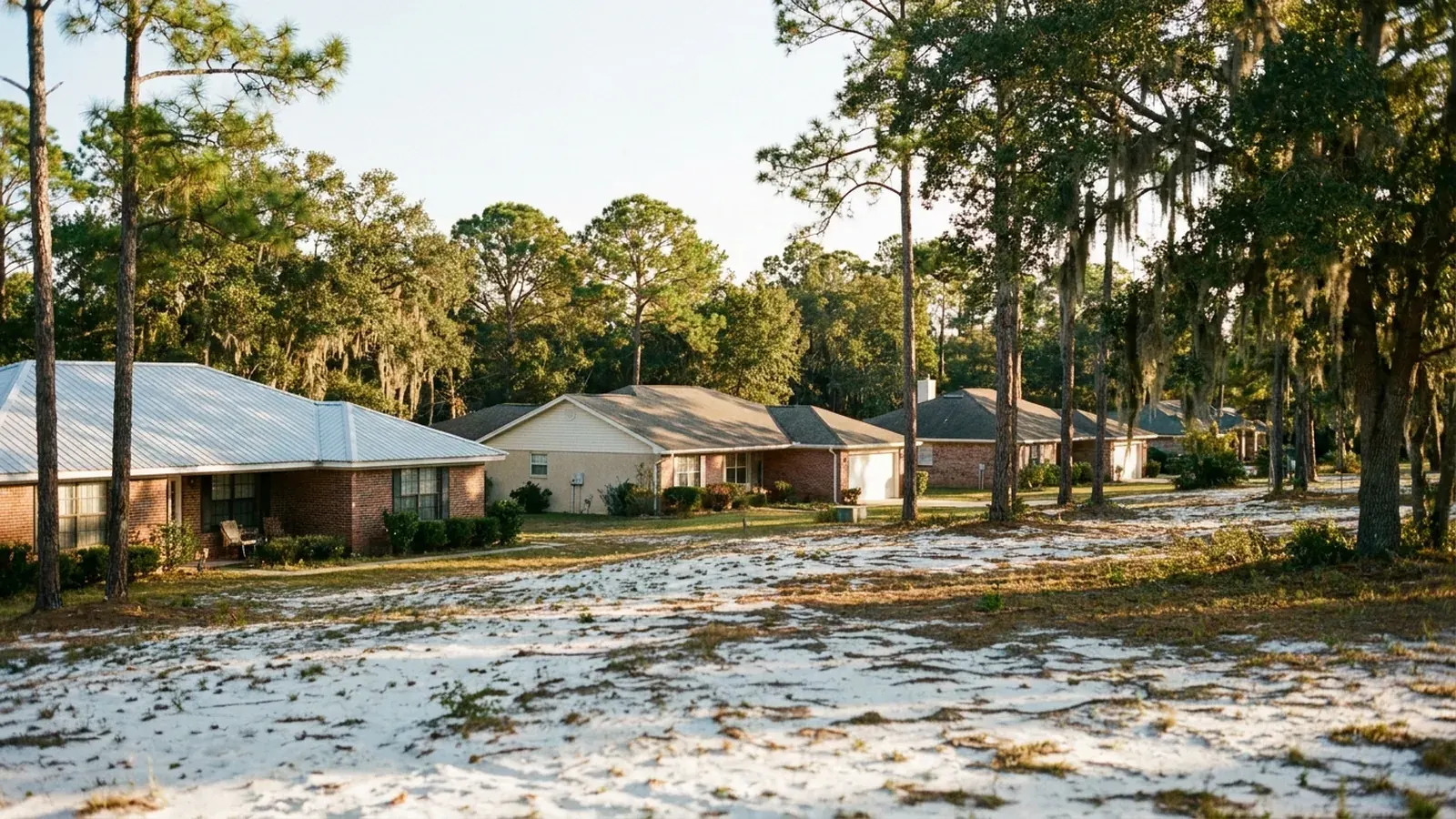
Foundation repair in Pensacola costs $4,000–$15,000 for most full repairs, piers $1,200–$3,000 each, void filling $2,000–$9,000, erosion control $1,500–$6,000. On sand, support and fill are separate line items.
What each class costs, why the split matters here specifically, and the four lines that make two quotes comparable.
What each job class costs
| Work | Typical range | What it solves |
|---|---|---|
| Void filling and grouting | $2,000–$9,000 | Material that has left — priced by volume replaced |
| Foundation piering | $4,000–$15,000 | A structure that has dropped — $1,200–$3,000 per pier |
| Slab repair | $3,500–$12,000 | A slab spanning a cavity, with or without lift |
| Erosion control | $1,500–$6,000 | The flow that removed the sand in the first place |
| Concrete leveling | $500–$2,500 | Flatwork that dropped into the cavity first |
| Assessment | Often free | Probing, sounding, and the numbers |
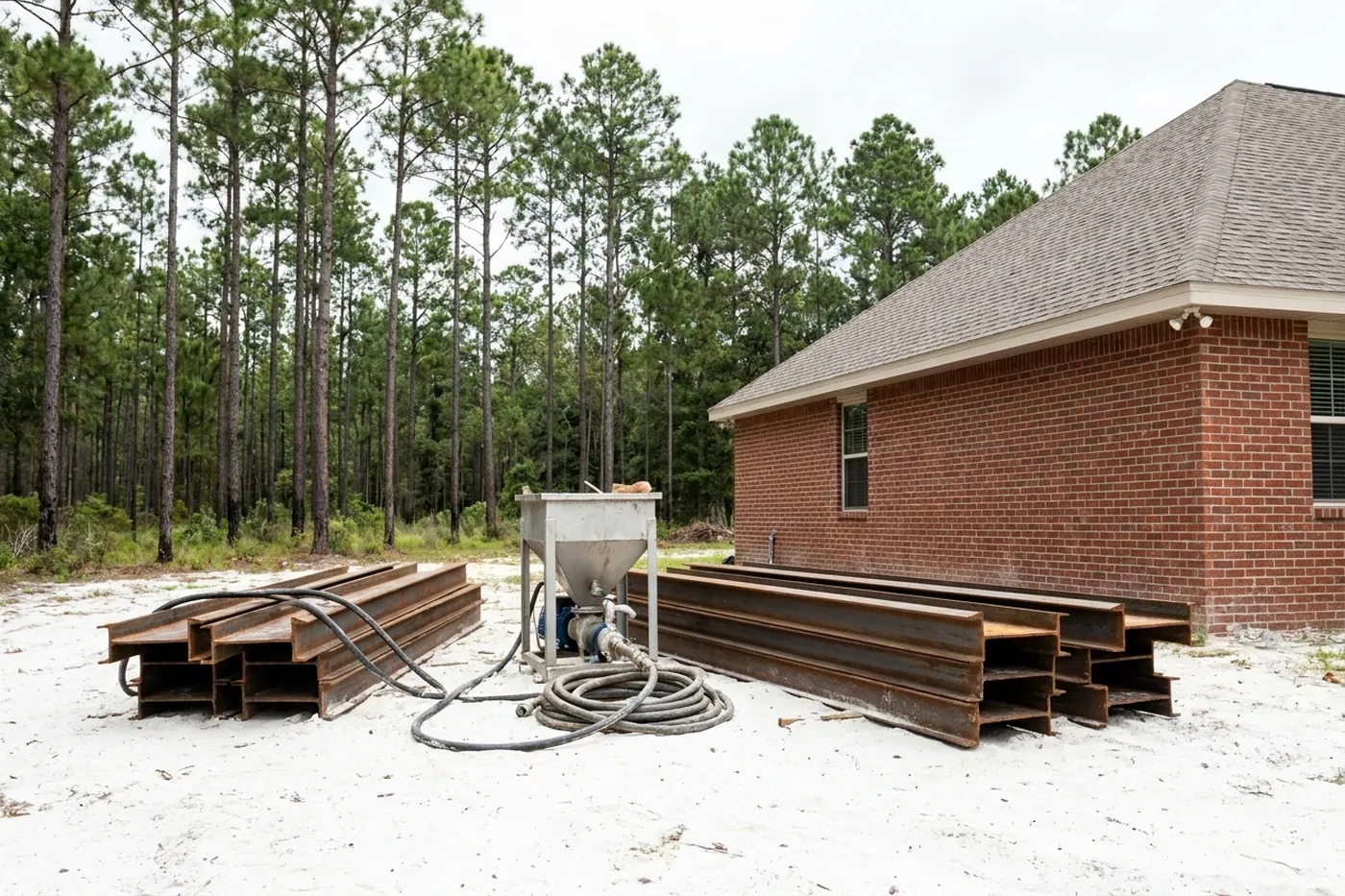
Support and fill are not the same purchase
This is the local specific and it is worth being blunt about. Inland, a foundation quote is essentially a support quote — how many piers, how deep. The ground is still there; it is just unreliable.
Here the ground may be partly gone. So a complete scope answers two questions. What is being supported, and what is being filled. A quote that prices ten piers and never mentions the cavity has addressed the half of the problem that is easier to itemise.
The reverse also happens: filling a cavity under a slab that has genuinely dropped restores contact without restoring elevation, which may be fine, but should be a decision rather than an accident.
Four lines that make quotes comparable
- Pier count and depth assumption, with a per-foot rate beyond it
- Assumed fill volume, with a rate for material beyond it — because nobody knows the true volume until the cavity takes what it takes
- Whether erosion control is in or out, stated explicitly rather than implied
- Lift target — fill only, or fill and a defined amount of recovery
The second line is the one almost universally missing. A fixed total for void filling, with no stated volume, is a guess presented as a price.
Where the first dollar goes furthest
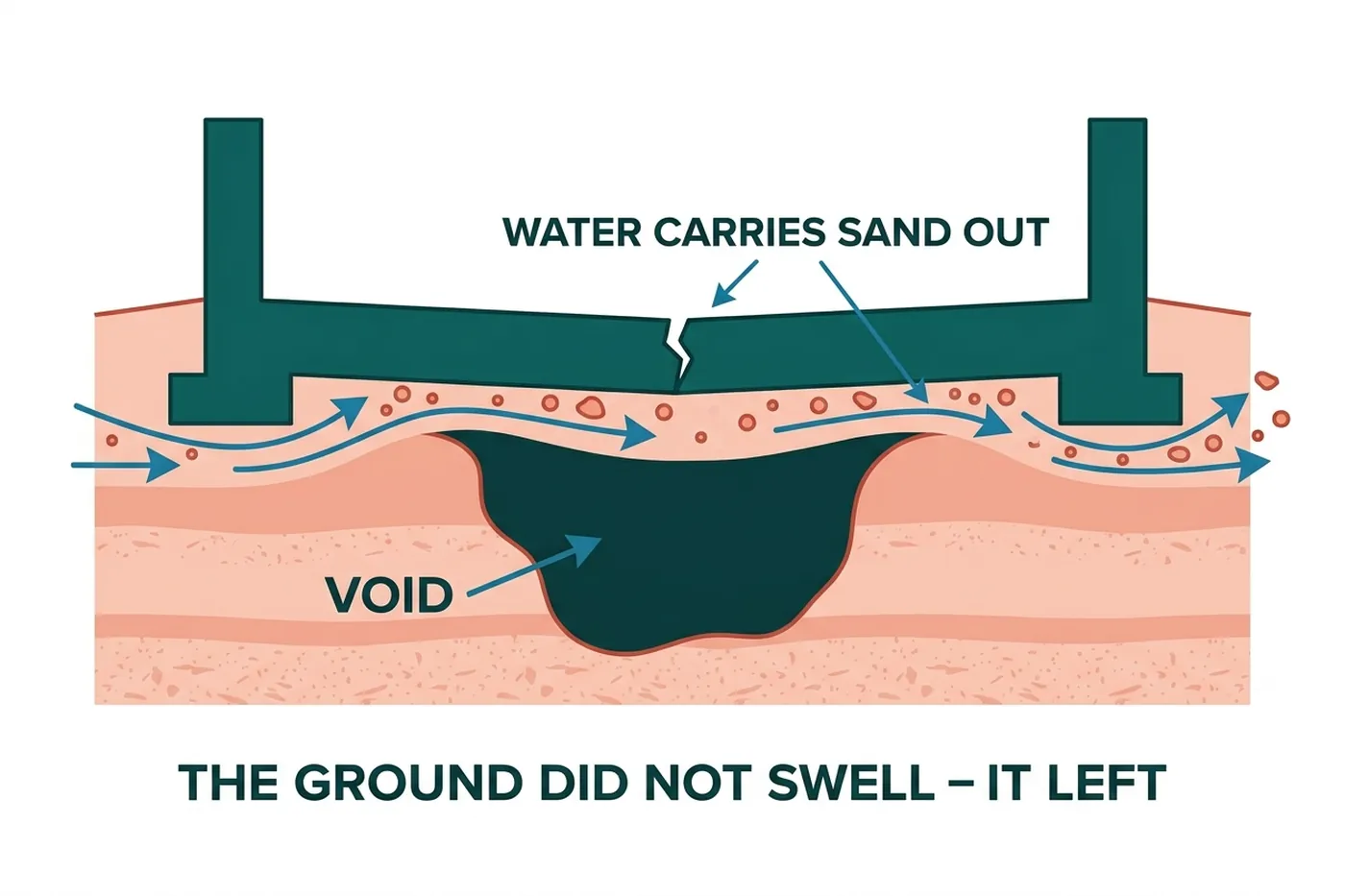
Water, fill, support, cosmetics — in that order. Interrupting the flow is the cheapest item on the page and it is the one that stops the problem recurring. Filling comes next because a cavity found before the slab drops into it is materially cheaper than the same cavity found afterward. Support goes where something has actually moved. Cracks get repaired last, once nothing is still moving.
Reverse that order and the most expensive version is filling a cavity while the flow that created it runs on, which buys a season.
Insurance, briefly
Wind damage is a covered peril and a tree through the roof is a real claim. Ground movement generally is not: earth movement exclusions typically capture washout even where a named storm delivered the water. Florida's statutory sinkhole provisions are narrower than most homeowners expect — the detail is on the sinkhole coverage page.
Cost questions — the practical answers
What is the average foundation repair cost in Pensacola?
Most full repairs run $4,000-$15,000, with piers commonly $1,200-$3,000 each and void filling $2,000-$9,000. Erosion control is $1,500-$6,000 and concrete leveling $500-$2,500. Many local specialists don't charge for the assessment; ask when they call.
Why are there two separate line items?
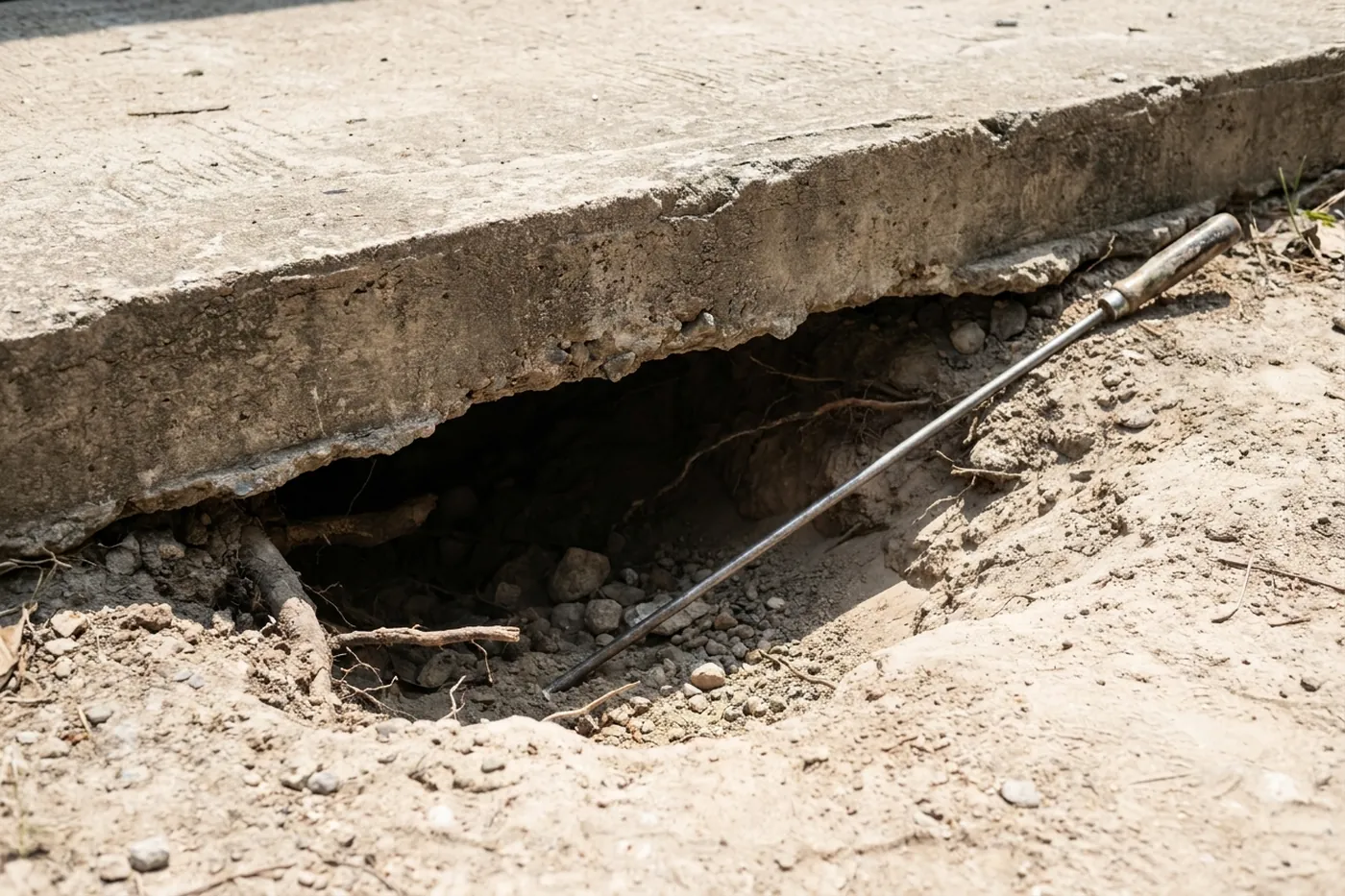
Because there are two separate problems. Support carries the building down past unreliable ground. Fill replaces material that has physically left. On sand you frequently need both, and a quote that only prices one has described half the job.
Why do two quotes differ so much?
Usually because one of them omitted the fill, or omitted the erosion control, or assumed a void volume nobody measured. Ask each bidder for the assumed fill quantity and the rate beyond it, and the totals become comparable for the first time.
Is the first visit free?
Many local specialists don't charge for the first visit, but it depends on the company. Ask when the specialist calls, before they come out. Ask for probing and sounding for cavities and the written scope as part of it.
What if I only fix the water?
On a house where nothing has dropped and the cavity is small, that can genuinely be the whole job at $1,500-$6,000. It stops the cause. What it does not do is replace material already gone or lift anything that has already moved.
Does insurance cover any of this?
Rarely. Earth movement exclusions typically capture washout even after a named storm, and Florida's statutory sinkhole provisions require the building to be condemned before catastrophic ground cover collapse cover responds. Wind damage is a separate and better story.
How many quotes should I get?
Two that separate support from fill beat four that give a single total. A useful Pensacola quote states the pier count and depth assumption, the assumed fill volume and overage rate, and whether erosion control is included or excluded.
Book a Pensacola foundation assessment
The most useful thing you can tell us is when it started, and whether anything happened around then — a named storm, a week of hard rain, a broken line, a neighbour regrading their lot. On sand, damage follows events rather than seasons, so a date is worth more here than a description. A local specialist who works in Pensacola will call you back.