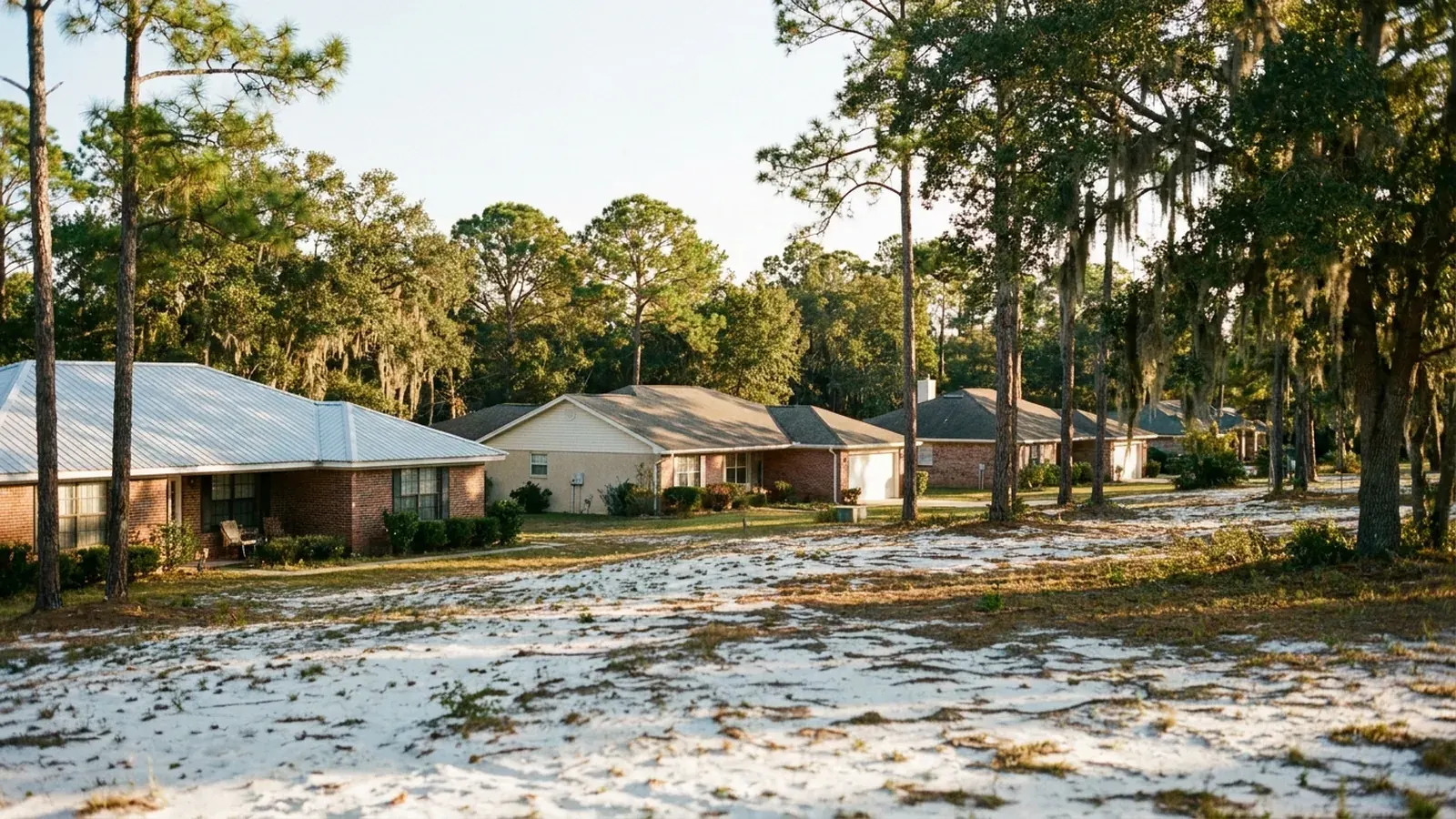
Florida requires every property insurer to provide catastrophic ground cover collapse coverage. But under Fla. Stat. 627.706 it pays only where the ground abruptly collapses, a depression is visible, the structure is damaged, and the building is condemned and ordered vacated — all four.
The four-part test, the sentence that excludes ordinary cracking, the deductibles, and the dispute process.
Two coverages, and neither pays for ordinary foundation repair
Catastrophic ground cover collapse. Mandatory. Every insurer authorised to transact property insurance in Florida must provide it. Included in your policy whether or not you asked.
Sinkhole loss coverage. Optional. Insurers must make it available for an appropriate additional premium, and may require an inspection of the property before issuing it. If you did not buy it and pay for it, you do not have it.
Most homeowners know they have "sinkhole coverage" and mean the first. The first is far narrower than the name suggests.
The four-part test, all of which must apply
- The abrupt collapse of the ground cover
- A depression in the ground cover clearly visible to the naked eye
- Structural damage to the covered building, including the foundation
- The insured structure being condemned and ordered to be vacated by the government agency authorised to issue such an order
Read the fourth one again. Catastrophic ground cover collapse coverage does not respond until your house has been condemned. A cavity, a dropped slab, and a wall full of cracks do not reach it.
The sentence that ends most foundation repair claims
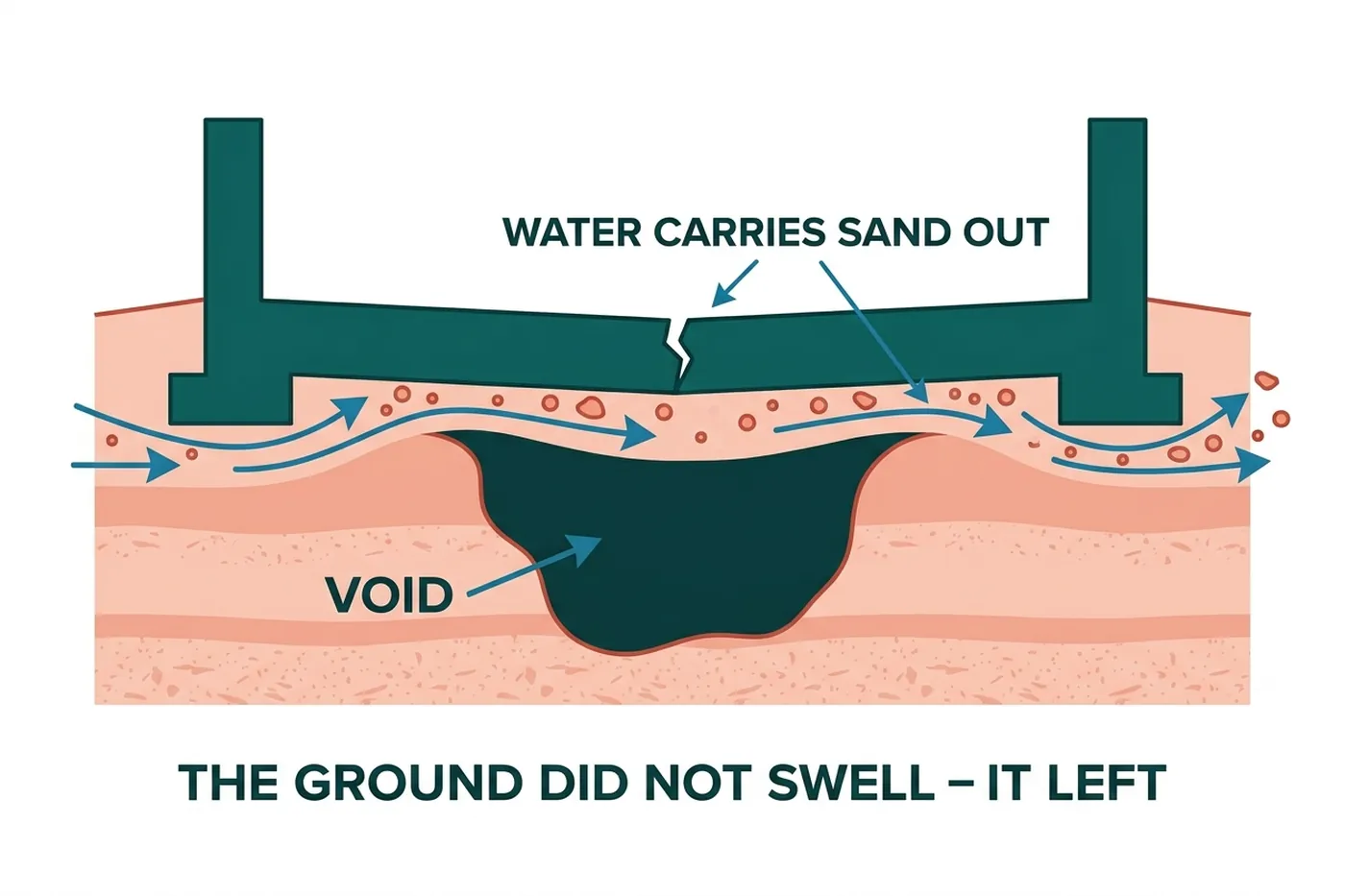
The statute is explicit, and it is worth quoting rather than paraphrasing: damage consisting merely of the settling or cracking of a foundation, structure, or building does not constitute a loss resulting from a catastrophic ground cover collapse.
That is the ordinary Pensacola foundation problem, described and excluded in one line. A washout cavity under a slab, with cracking above it, is not a catastrophic ground cover collapse however alarming it looks — and it is generally not covered under standard policy terms either.
The deductibles, which are unusual
| Deductible option | On a $400,000 dwelling limit |
|---|---|
| 1% | $4,000 |
| 2% | $8,000 |
| 5% | $20,000 |
| 10% | $40,000 |
Residential sinkhole deductibles are set as a percentage of dwelling limits rather than a flat sum, with premium discounts offered against each. At the higher options the deductible can comfortably exceed the cost of the repair, which is worth knowing before you assume the coverage is worth buying or worth claiming on.
If you disagree with the insurer
Florida provides a neutral evaluation process — alternative dispute resolution conducted by a licensed engineer or professional geologist with expertise in identifying sinkhole activity and other causes of structural damage, who has completed an approved course in the procedure.
The existence of a statutory dispute mechanism tells you how often these are contested. Nothing on this page is legal or insurance advice; read your own policy and talk to your agent or a lawyer about your circumstances.
Coverage — the practical answers
Does my Florida policy cover sinkholes?
It must include catastrophic ground cover collapse coverage - every insurer authorised to write property insurance in Florida has to provide it. Broader sinkhole loss coverage is different: insurers must make it available for an additional premium, but you have to have bought it.
What does catastrophic ground cover collapse actually require?
Four things together, under Fla. Stat. 627.706: abrupt collapse of the ground cover, a depression clearly visible to the naked eye, structural damage to the building including the foundation, and the structure being condemned and ordered vacated by the authorised government agency.
So cracking and settling are not covered?
Correct, and the statute says so directly: damage consisting merely of the settling or cracking of a foundation, structure or building does not constitute a loss resulting from catastrophic ground cover collapse. That single sentence disposes of most claims people expect to succeed.
What deductible applies to sinkhole coverage?
For residential property insurance, the policy may apply a sinkhole deductible of 1, 2, 5 or 10 percent of the dwelling limits, with premium discounts offered against each. On a $400,000 dwelling limit a 10 percent deductible is $40,000, which can exceed the repair.
Can the insurer inspect before selling me the coverage?
The insurer can inspect before selling you the coverage. The statute allows an insurer to require an inspection of the property before issuing sinkhole loss coverage, and to restrict both catastrophic ground cover collapse and sinkhole coverage to the principal building as defined in the policy.
What if the insurer and I disagree?
Florida provides a neutral evaluation process as alternative dispute resolution, using an engineer or professional geologist with relevant expertise who has completed an approved course in the procedure. It exists precisely because these disputes are common.
Book a Pensacola foundation assessment
The most useful thing you can tell us is when it started, and whether anything happened around then — a named storm, a week of hard rain, a broken line, a neighbour regrading their lot. On sand, damage follows events rather than seasons, so a date is worth more here than a description. A local specialist who works in Pensacola will call you back.