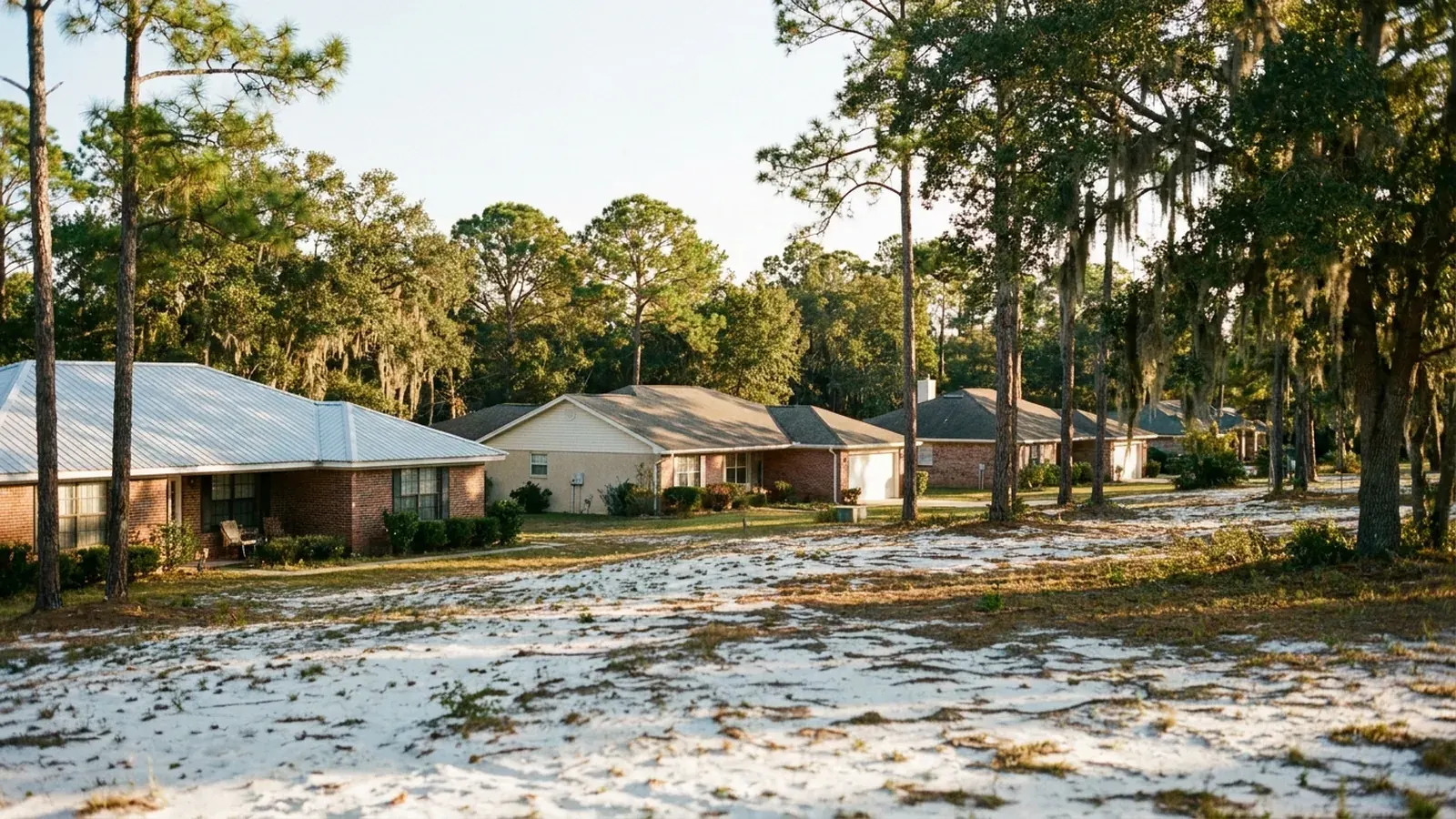
Storm rainfall drives foundation repair here by moving the sand beneath a house. On 29 April 2014 Pensacola recorded 15.55 inches in one calendar day — the greatest since records began in 1879 — and about 20.47 inches over 48 hours, an event assessed between 1-in-100 and 1-in-200 year.
Why damage here is event-driven rather than seasonal, the lag that hides the connection, and what to check afterward.
Events, not seasons
This is the single most important difference between Pensacola and the expansive-clay markets inland. There, foundation damage builds across wet and dry seasons and frequently reverses — a crack widens in a dry spell and closes after rain.
Here nothing reverses, because the mechanism is not swelling. Water arrives in quantity, moves through sand fast enough to carry material with it, and the sand does not return. Annual rainfall of 65.27 inches supplies the volume; individual extreme events supply the velocity.
Which is why the useful question on this coast is what happened and when rather than what season it is worse in. If your damage has a date, that date is diagnostic.
The lag that hides the cause
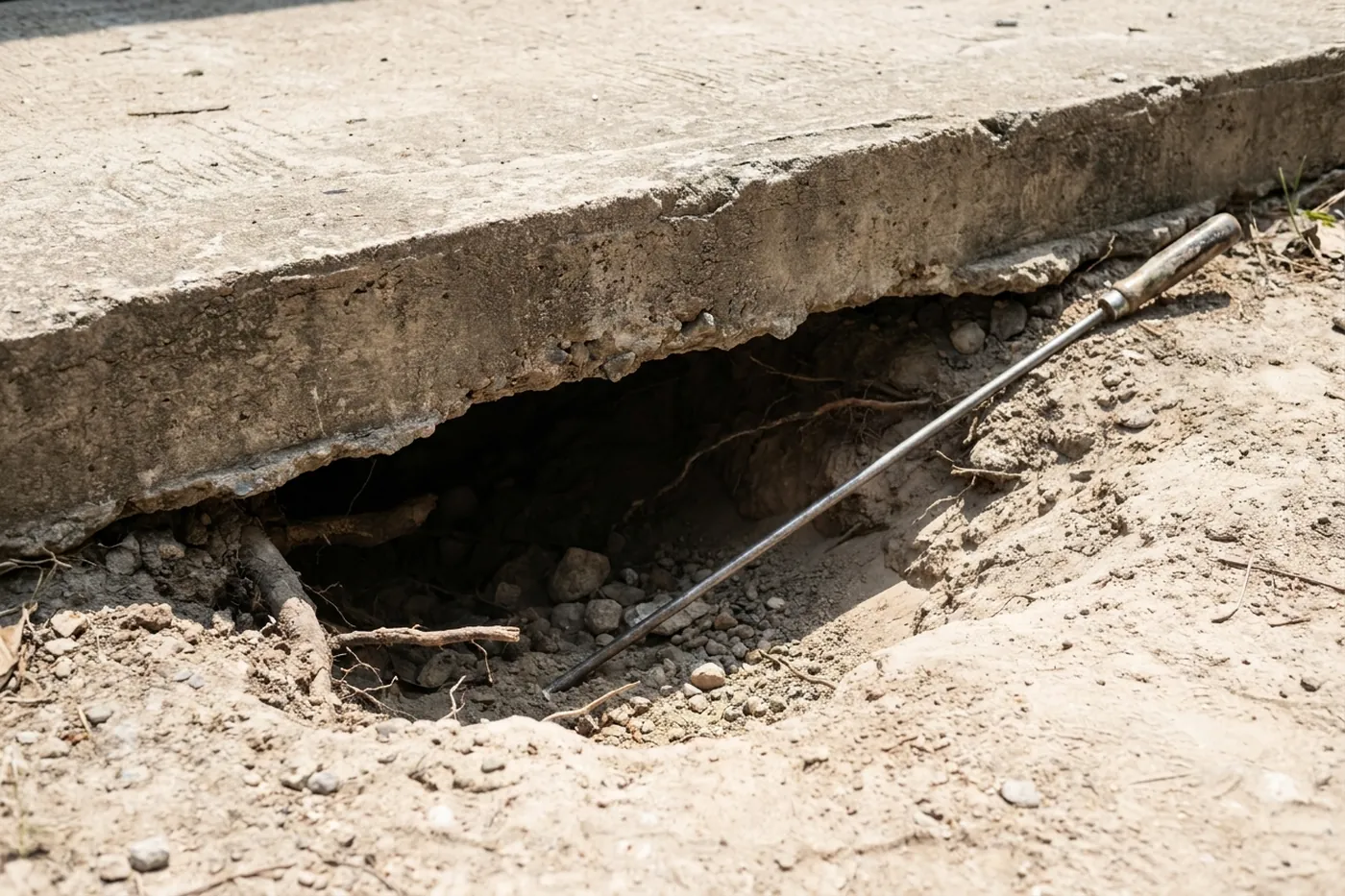
Cavities form during the event. Slabs often keep spanning them for weeks or months before dropping or cracking, because concrete is stiff enough to bridge a modest unsupported area for a while.
The practical effect is that a homeowner sees damage in July and does not connect it to a storm in April, so nobody investigates the water path that caused it. That connection is worth making, and it is usually made by asking rather than by measuring — which is why the first question is when it started.
What to check after heavy rain
| Where | What you are looking for |
|---|---|
| Around discharge points | Scour craters where water lands hard |
| Along the slab edge | A gap opening between concrete and soil |
| Across the lot | Fan-shaped sand deposits — that sand came from uphill |
| Low areas and channels | Exposed roots, small gullies, fresh cutting |
| Inside, on the floor | Sections that sound hollow rather than solid |
All five are free and all five find a developing cavity before the expensive part happens.
Insurance, briefly and unhappily
Wind damage is a covered peril, so a tree through the roof is a different conversation. Ground movement is not: earth movement exclusions typically capture washout even where a named storm plainly delivered the water, and flood needs separate coverage entirely.
Homeowners frequently expect the Florida sinkhole provisions to help here and they generally do not — the statutory test requires the building to be condemned, and explicitly excludes mere settling or cracking. The detail is on the sinkhole coverage page. Document everything anyway, and read your own policy rather than a summary.
What storm damage foundation repair involves
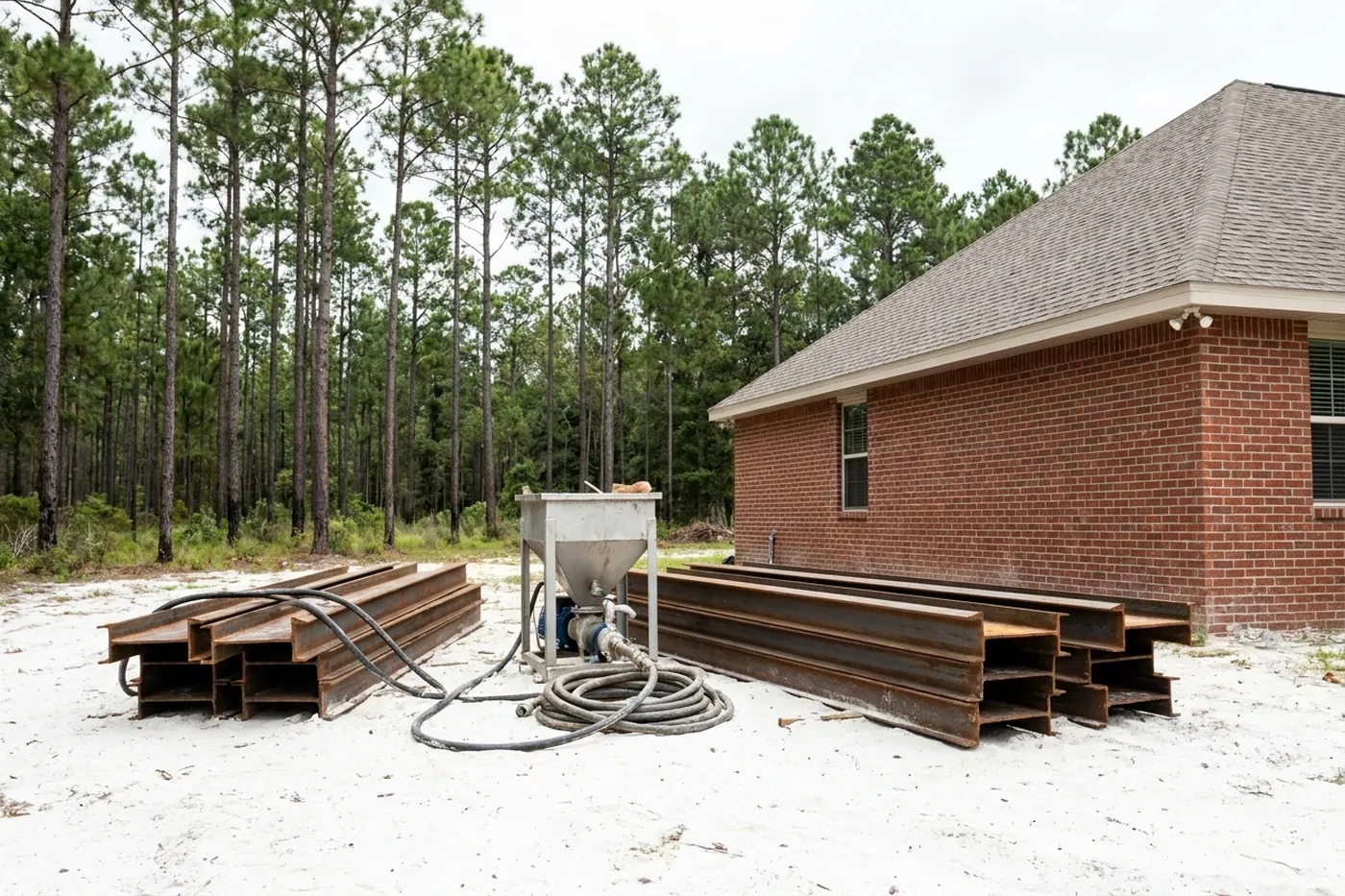
Almost always two things rather than one. The cavity a storm opened gets filled, and the flow that opened it gets interrupted — because a filled void beneath an unchanged drainage path is a purchase with an expiry date on it.
Where the slab is still sitting at its original elevation, that is the whole job and it is at the cheaper end. Where it has already dropped into the space, support goes in as well, and the price moves accordingly. Which of those you are looking at is settled by reading elevations across the footprint, not by how alarming the crack looks from inside.
Storm damage — the practical answers
Can a storm really move my foundation?
Not by pushing it. What a storm does is move the ground underneath by delivering more water than the soil can pass without carrying material away. On 29 April 2014 Pensacola recorded 15.55 inches in a single calendar day - the greatest since records began in 1879 - and roughly 20.47 inches across 48 hours.
How soon after a storm would I see it?
Sometimes immediately, often over the following weeks. The cavity forms during the event; the slab above it may keep spanning for a while before it drops or cracks. That lag is why homeowners frequently fail to connect the damage to the rainfall that caused it.
What should I check after a major rain event?
Walk the outside looking for scour, exposed roots, fan-shaped sand deposits and any gap opening between the slab and the soil. Inside, listen for hollow-sounding floor sections. Both are free and both catch a cavity before the slab drops into it.
Is storm-caused foundation damage covered by insurance?
Usually not. Wind damage is a covered peril, but ground movement and earth movement exclusions typically capture washout even where a named storm delivered the water. Flood requires separate coverage. Document everything regardless, and check your own policy language.
Should I wait to see if it settles down?
Waiting is reasonable for clay markets where movement reverses. It is a poor strategy here, because nothing puts washed sand back and the cavity generally grows with each subsequent rain. A cavity found early is materially cheaper than the same cavity found after the slab drops.
Book a Pensacola foundation assessment
The most useful thing you can tell us is when it started, and whether anything happened around then — a named storm, a week of hard rain, a broken line, a neighbour regrading their lot. On sand, damage follows events rather than seasons, so a date is worth more here than a description. A local specialist who works in Pensacola will call you back.