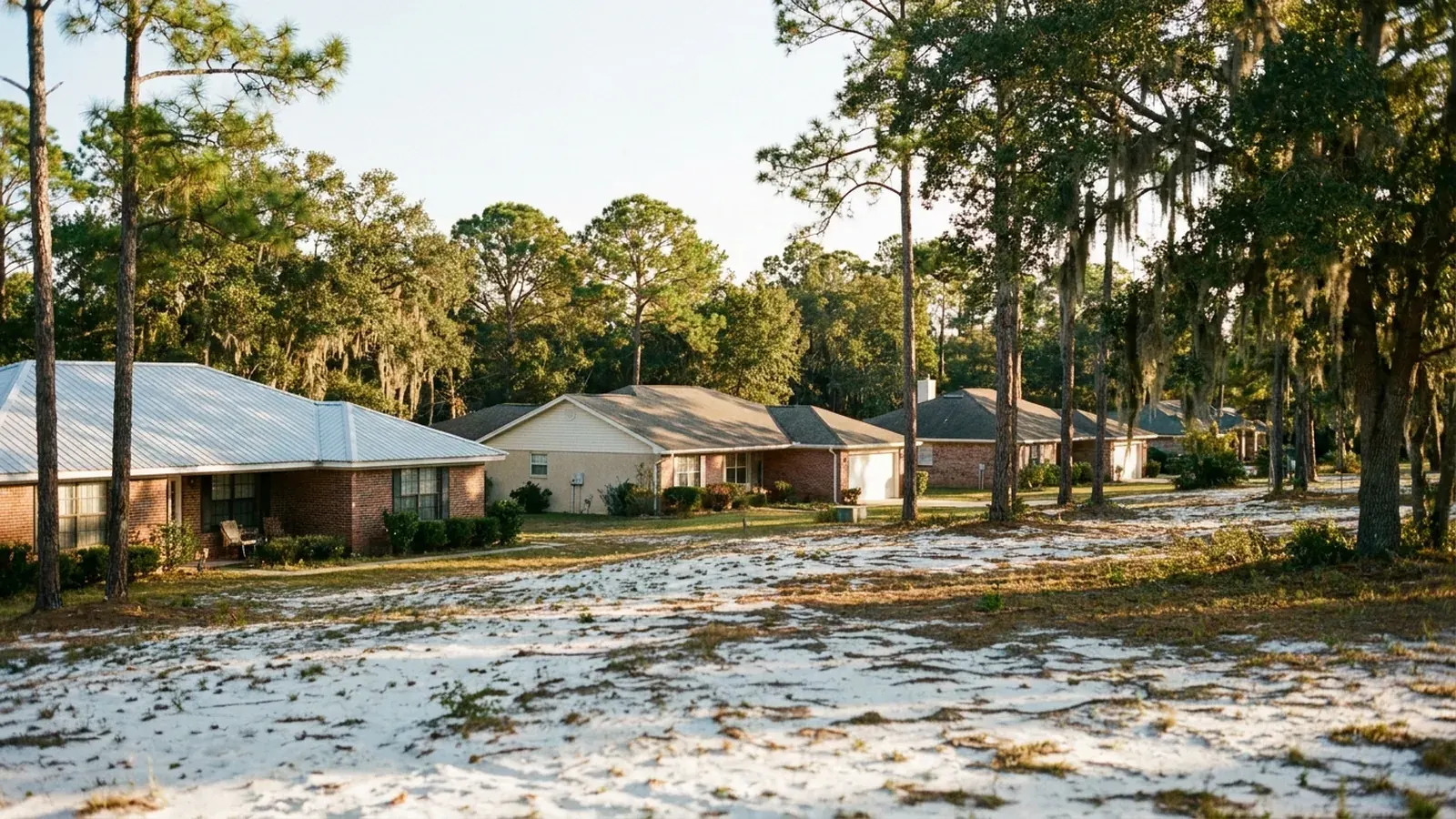
Pensacola Foundation Co. covers foundation repair across Escambia and Santa Rosa: void filling, piering, slab repair, erosion control and concrete leveling. Many local specialists don't charge for the assessment; ask when they call, and ask for probing and sounding for washout cavities, and ask to keep the written scope regardless.
Three things we will not certify
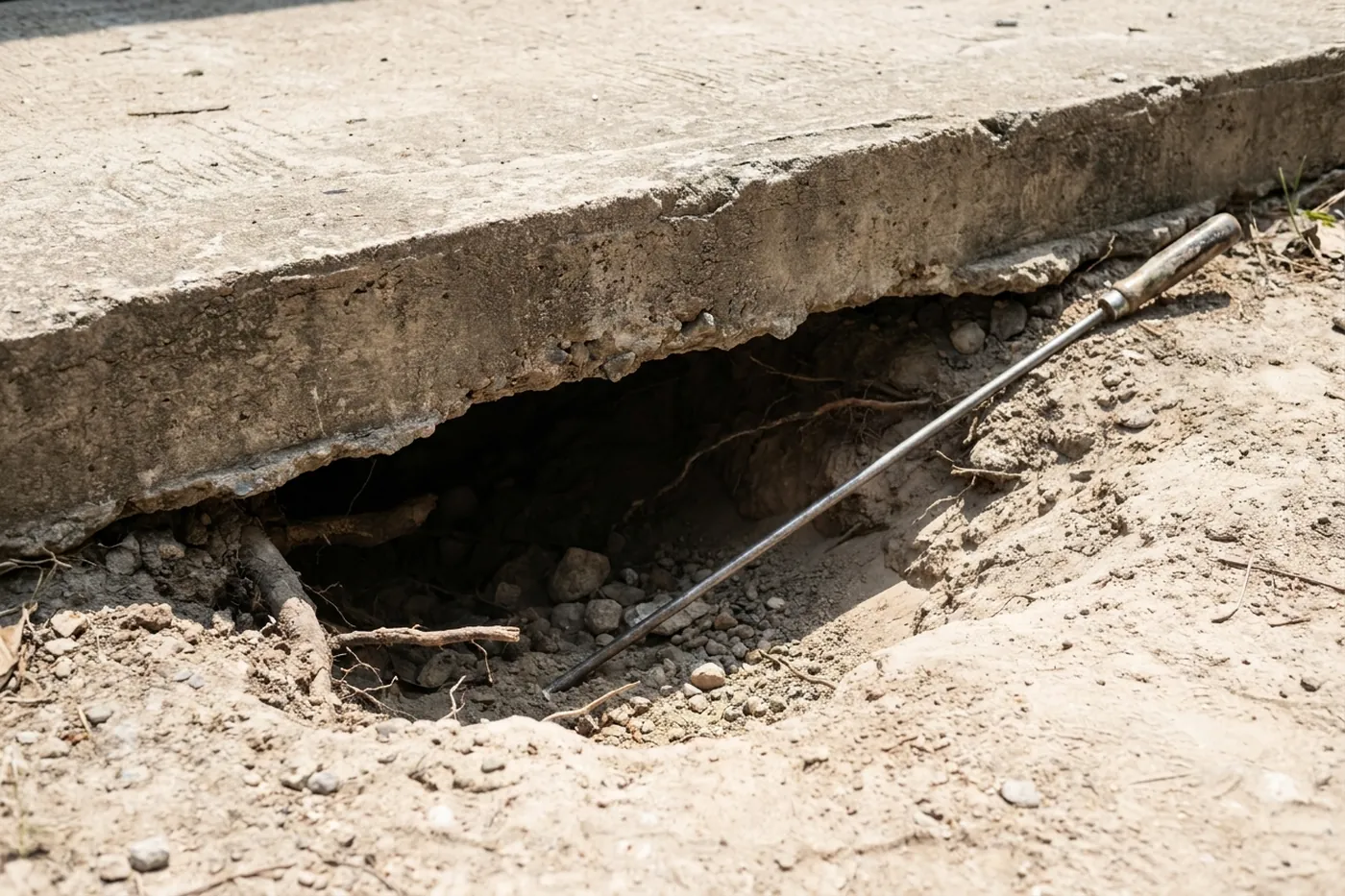
1. That you do not have a sinkhole. We are not geologists, and a foundation contractor does not investigate below the soil. A good specialist can tell you when a cavity fits the washout pattern and a water path explains it — which is nearly always. Nobody here can rule out subsurface geology, and any foundation contractor offering that reassurance from a driveway is selling certainty they do not have. Where the pattern does not fit, a good specialist says so and you need a geotechnical opinion.
2. The exact volume of a cavity before it is filled. Nobody knows. Probing and test drilling narrow it; the true figure is what the void accepts. So a good scope states an assumed quantity and a rate beyond it rather than a confident total, because a confident total on an unmeasured space is a number somebody invented.
3. That the ground will never move again. Sand moves when water moves through it. A repair can interrupt the flow it finds and fill what has gone. Nobody can promise the next 1-in-100-year rainfall behaves. What should go in writing is what the warranty covers, which is a real commitment rather than a reassuring sentence.
What a good scope commits to
- A scope that separates support from fill, because on this ground they are different problems and a single total hides which one you are buying
- An assumed fill volume with an overage rate, stated before work begins
- Erosion control priced in or explicitly priced out — never left implied
- Per-pier logging where piers are installed: depth reached and what each landed on
- Telling you when the honest answer is water management alone, which is the cheapest thing here
What foundation repair on this coast actually has to do
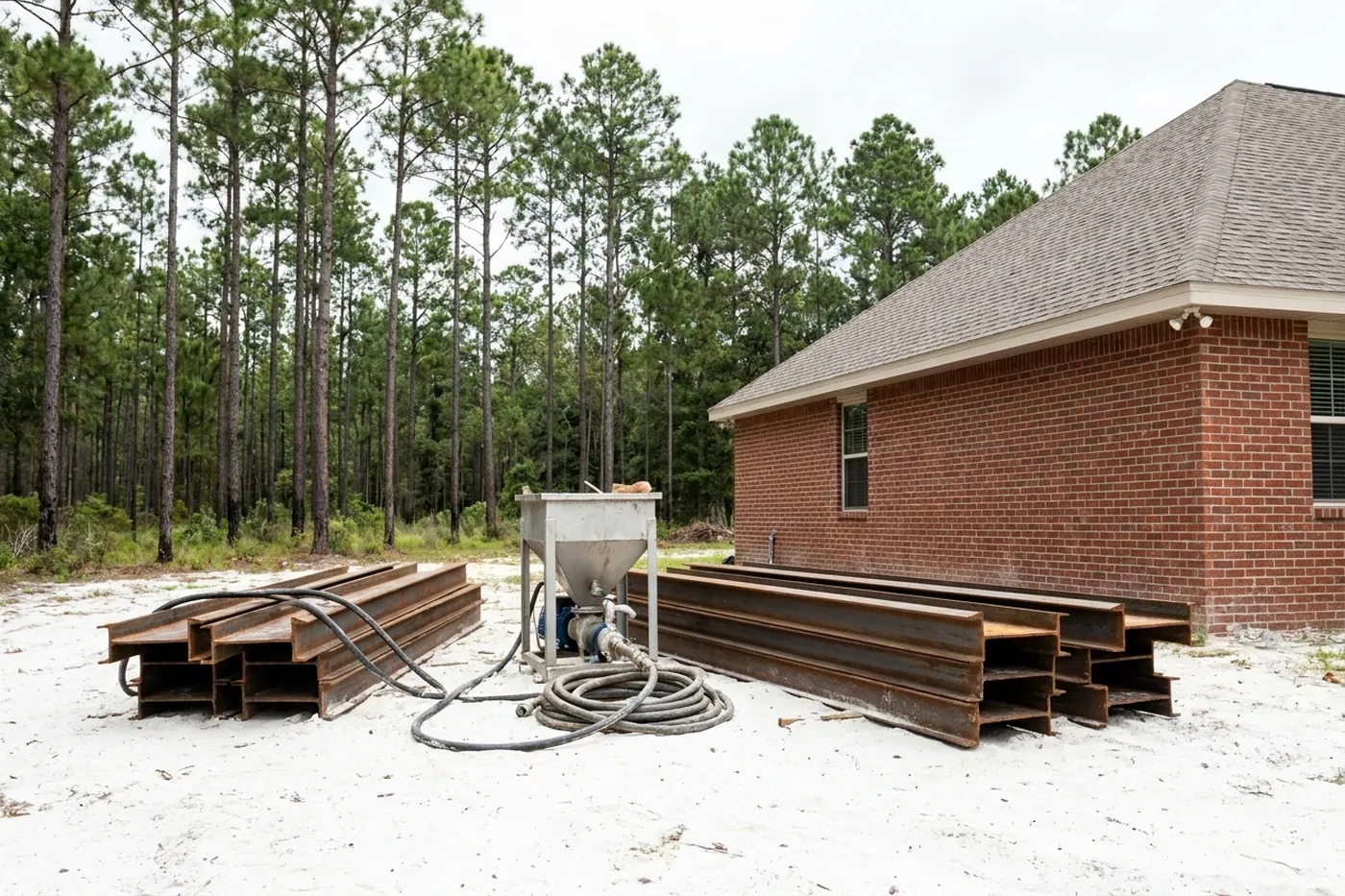
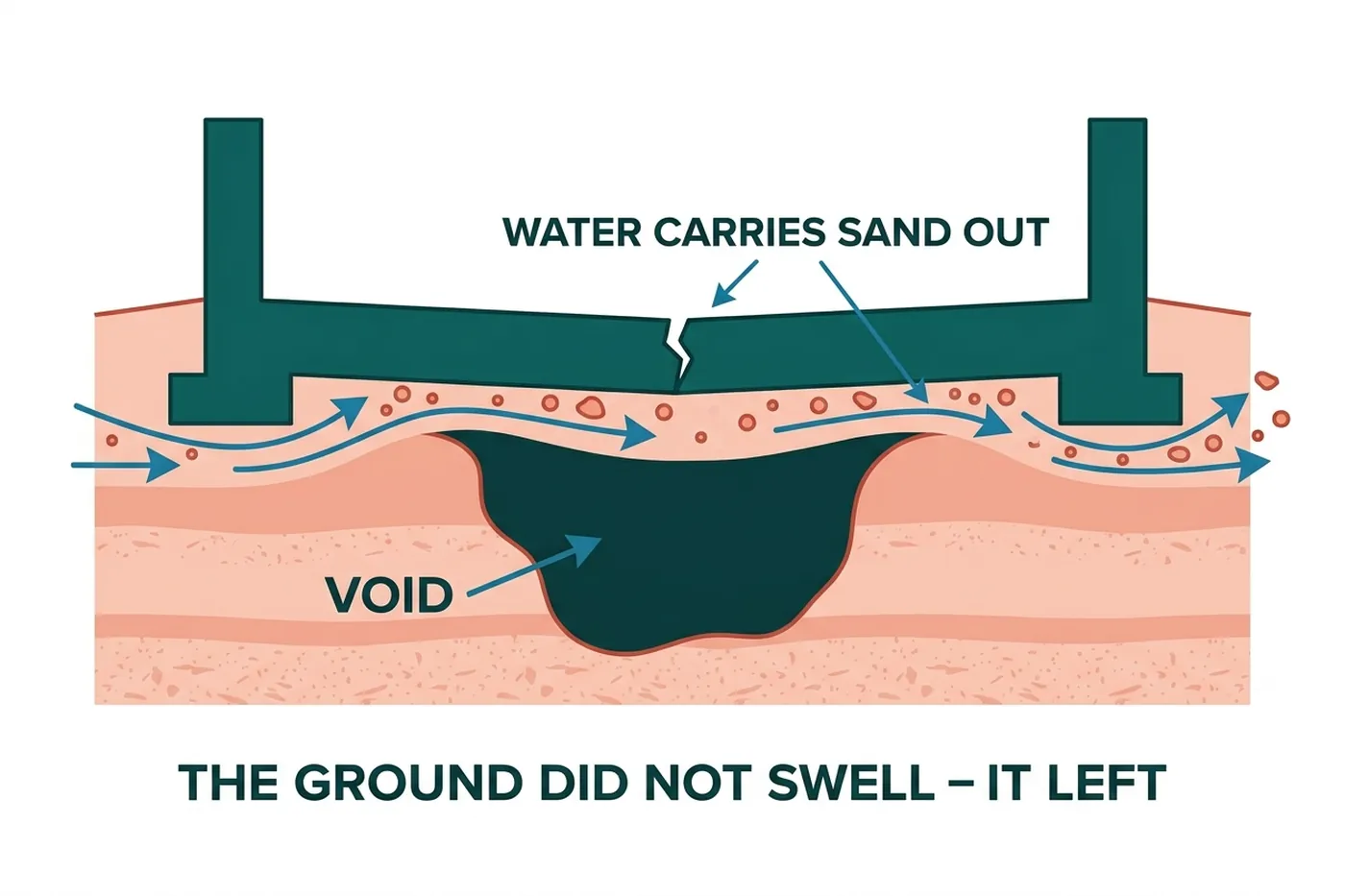
Two jobs, and most companies price only the first. Carrying the structure down to firmer ground is support. Putting back the material that water removed from under it is fill. On clay the second job does not exist, because the soil is still there — it has simply changed volume. Here it may be physically gone.
That is why a good scope separates the two lines and states an assumed fill volume with a rate beyond it. A single total hides which of the two problems you are paying to solve, and on sandy ground that is the difference between a repair that holds and one that gets bought twice.
Why the method suits this coast specifically
Inland foundation work is largely about support, because the ground is still present and merely unreliable. Here it may be partly absent, and the two halves of the job are genuinely separate purchases. A company that arrives with a clay-market process will count piers, quote confidently, and leave the cavity and the flow untouched.
That is not usually dishonesty. It is the wrong process applied competently, and the way to detect it is to ask what happens to the space under the slab. See what the answer should look like on the cost guide.
About us — the practical answers
How long have you worked this coast?
We don't do the repair work; we pass each request to one independent local specialist, so ask them. We won't fill it in with a plausible number. The limits listed above are the testable part, and the first one can be tested on a phone call before anybody drives anywhere.
What is your licence?
We are not the contractor, so the licence that matters is the specialist's. Florida licenses construction contractors under Chapter 489. Ask for the number before they quote and verify it yourself rather than accepting it from anyone.
If you cannot certify there is no sinkhole, what use is the assessment?
It tells you whether a cavity exists, roughly how far it runs, what it will cost to fill, and whether a water path explains it. That is most of what most homeowners need. What it cannot do is rule out subsurface geology, and pretending otherwise would make the rest worth less.
Is the first visit free?
Many local specialists don't charge for the first visit, but it depends on the company. Ask when the specialist calls, before they come out. Ask for the probing and sounding and the written scope as part of it. A visit that leaves a written volume assumption behind is at least a promise you can hold them to.
Book a Pensacola foundation assessment
The most useful thing you can tell us is when it started, and whether anything happened around then — a named storm, a week of hard rain, a broken line, a neighbour regrading their lot. On sand, damage follows events rather than seasons, so a date is worth more here than a description. A local specialist who works in Pensacola will call you back.