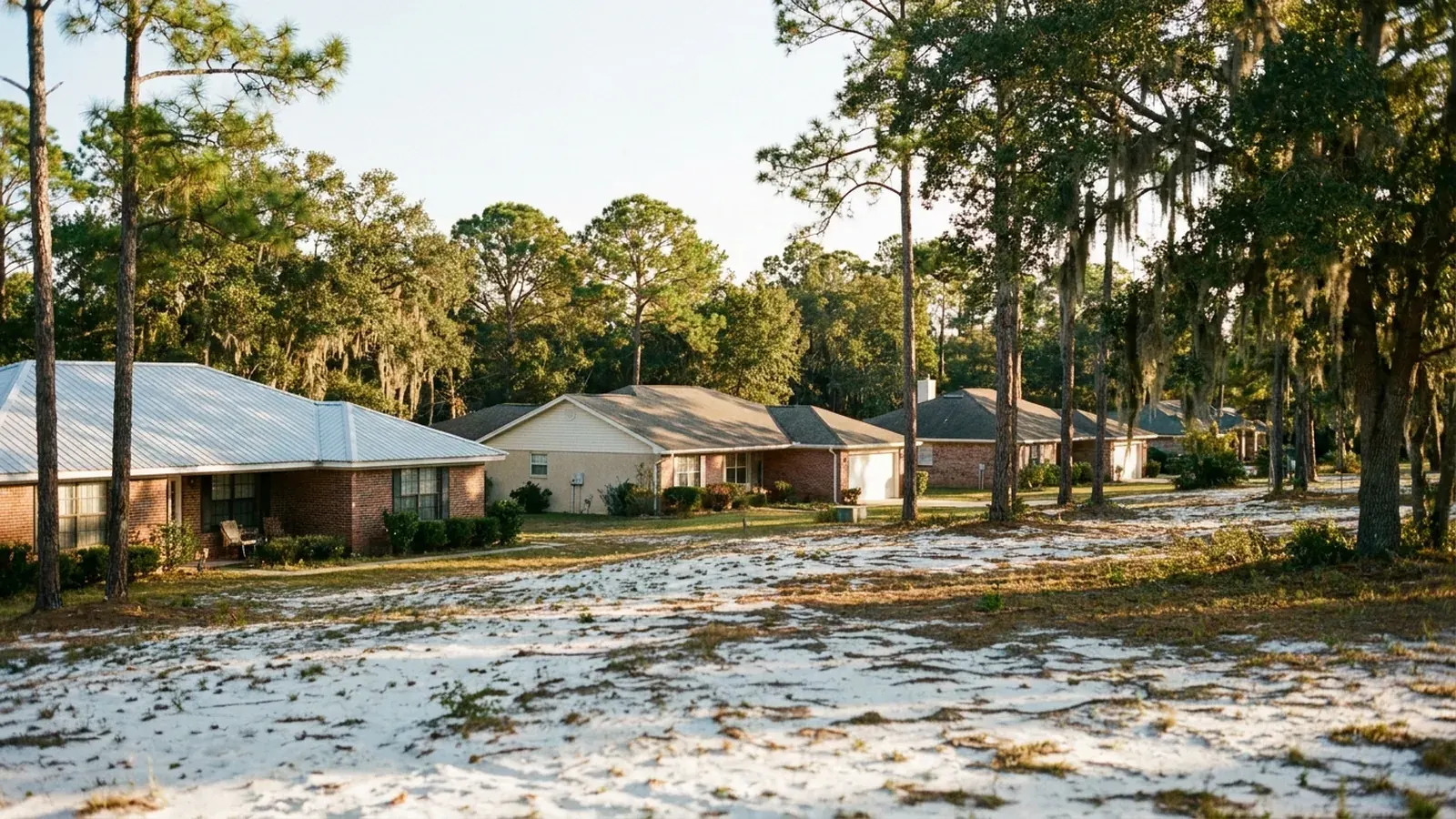
Void filling and grouting in Pensacola runs $2,000–$9,000. Sand does not swell or shrink — water moving through it carries it away, so a cavity opens beneath the slab. The price tracks the volume that has to go back, not the floor area above it.
Why this coast produces cavities rather than heaving, why piers alone can leave the job half done, and how the volume gets established.
Why Pensacola foundation repair starts with the cavity
Inland foundation markets sit on expansive clay. Clay takes on water and swells, dries and shrinks, and a foundation rides that cycle up and down. The soil stays where it is; it just changes size.
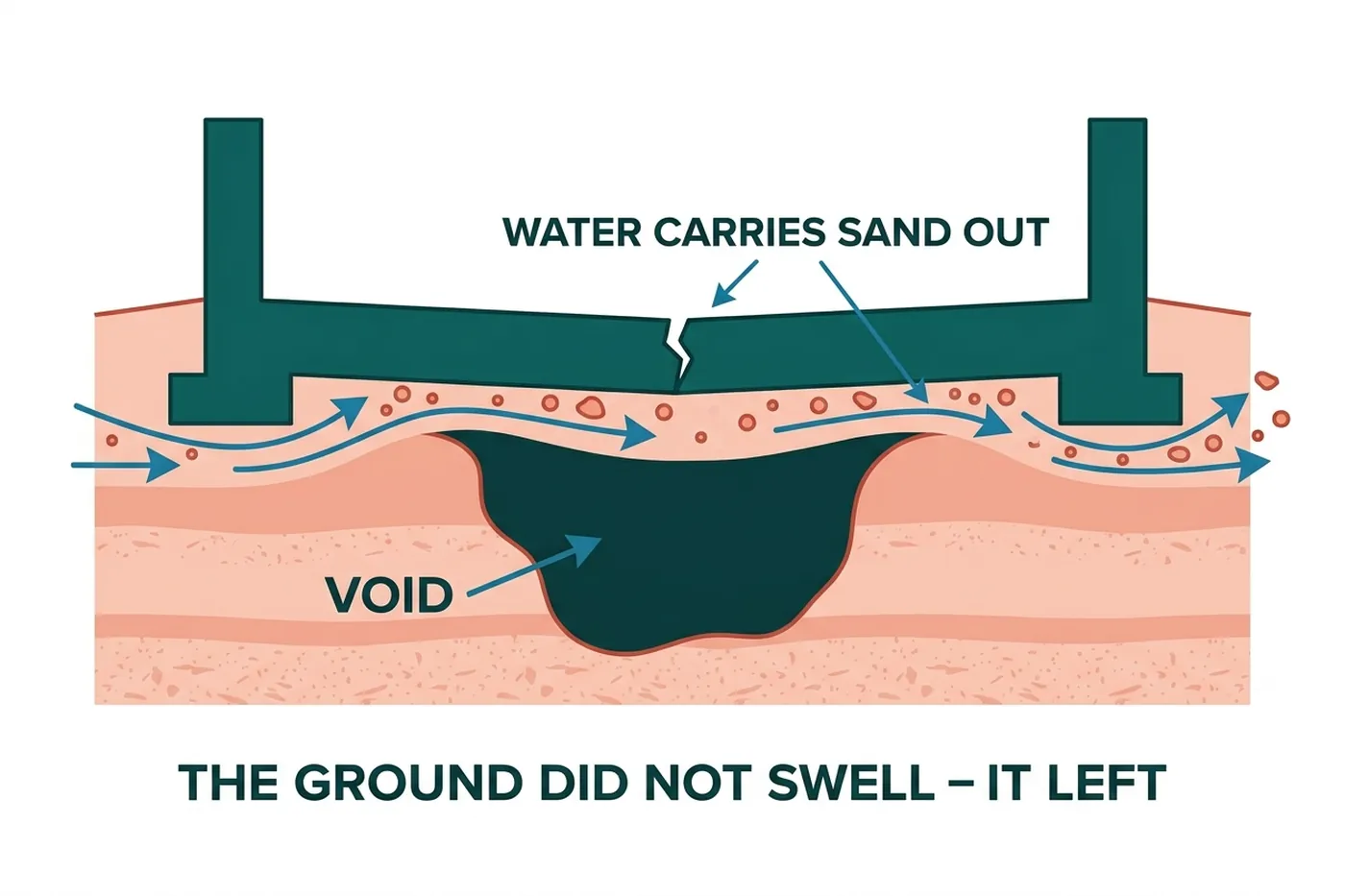
Pensacola sits on sand, and sand does none of that. It has essentially no shrink-swell behaviour at all. What it does instead is move. Water passing through carries the fine fraction with it, and once enough has gone the space it occupied is simply empty. The foundation above has not been lifted or dropped by a swelling soil — it has been left holding nothing.
That distinction sounds academic until you read a quote. It is the difference between a job that is about support and a job that is also about replacement.
Why piers alone can leave it half finished
Piering is genuine and often necessary work: steel is advanced past the unreliable material to something that will carry load, and the building is transferred onto it. Where the whole footprint is sitting on ground that keeps washing, that is exactly right.
But piers occupy points. A cavity is an area. Support the perimeter on steel and leave a void under the middle of the slab, and the slab is still bridging an unsupported span it was never designed for — which is how a house gets piered, declared finished, and cracks again along a line nobody addressed.
A scope worth having separates the two: what is being supported, and what is being filled. If a Pensacola quote is only a pier count, ask what happens to the space.
Establishing the volume before any foundation repair is priced
| Method | What it establishes |
|---|---|
| Probing at the slab edge | Whether a cavity exists and roughly how far it extends |
| Sounding the slab | The hollow, drumming areas that map the cavity from above |
| Test drilling | Depth of the void at specific points |
| Injected volume, recorded | The real answer — a cavity accepts what it accepts |
The last row is the honest one. Nobody knows the exact volume before the work starts, which is why a good scope states an assumed quantity and a rate for material beyond it. A fixed total with no stated assumption is a number somebody made up.
Grout or foam
| Cementitious grout | Polyurethane foam | |
|---|---|---|
| Cost | Lower | Higher |
| Weight added | Substantial | Very little |
| Cure | Hours | Minutes |
| Best where | Large cavities, competent surrounding ground | Ground already proved it could not carry a load |
On sand that has already washed, the weight row deserves a real decision rather than a default. Pumping several tons of cementitious material into ground that failed to support what was there is a choice, not a formality.
And then stop the water
A cavity is the record of a flow. Fill it and leave the flow running and you have bought time rather than a repair — which is why a good scope prices the fill together with interrupting what carried the sand out rather than treating them as separate jobs.
Void filling — the practical answers
What does void filling cost in Pensacola?
Void filling and grouting runs $2,000-$9,000 for most residential work. The number tracks the volume of material that has to go back rather than the floor area above it, so an accurate quote depends on somebody establishing how large the cavity actually is.
Why would there be a void under my slab at all?
Because the soil here is sand and water moving through it carries fines away. Nothing swelled or shrank - material physically left. That is the ordinary failure mode on this coast and it is why a cavity can open under a slab that was perfectly well built.
Can't you just install piers instead?
Piers carry the structure down to something firmer, which is often necessary and sometimes sufficient. What they do not do is fill the space that has opened underneath. Where a cavity remains, the slab is still spanning it, and slabs are not designed to span.
How do you know how big the void is?
By probing and by test drilling rather than by guessing from the crack pattern. The material injected also tells you: a cavity takes what it takes, and a scope that quotes a fixed volume without having established one is quoting a hope.
What gets injected?
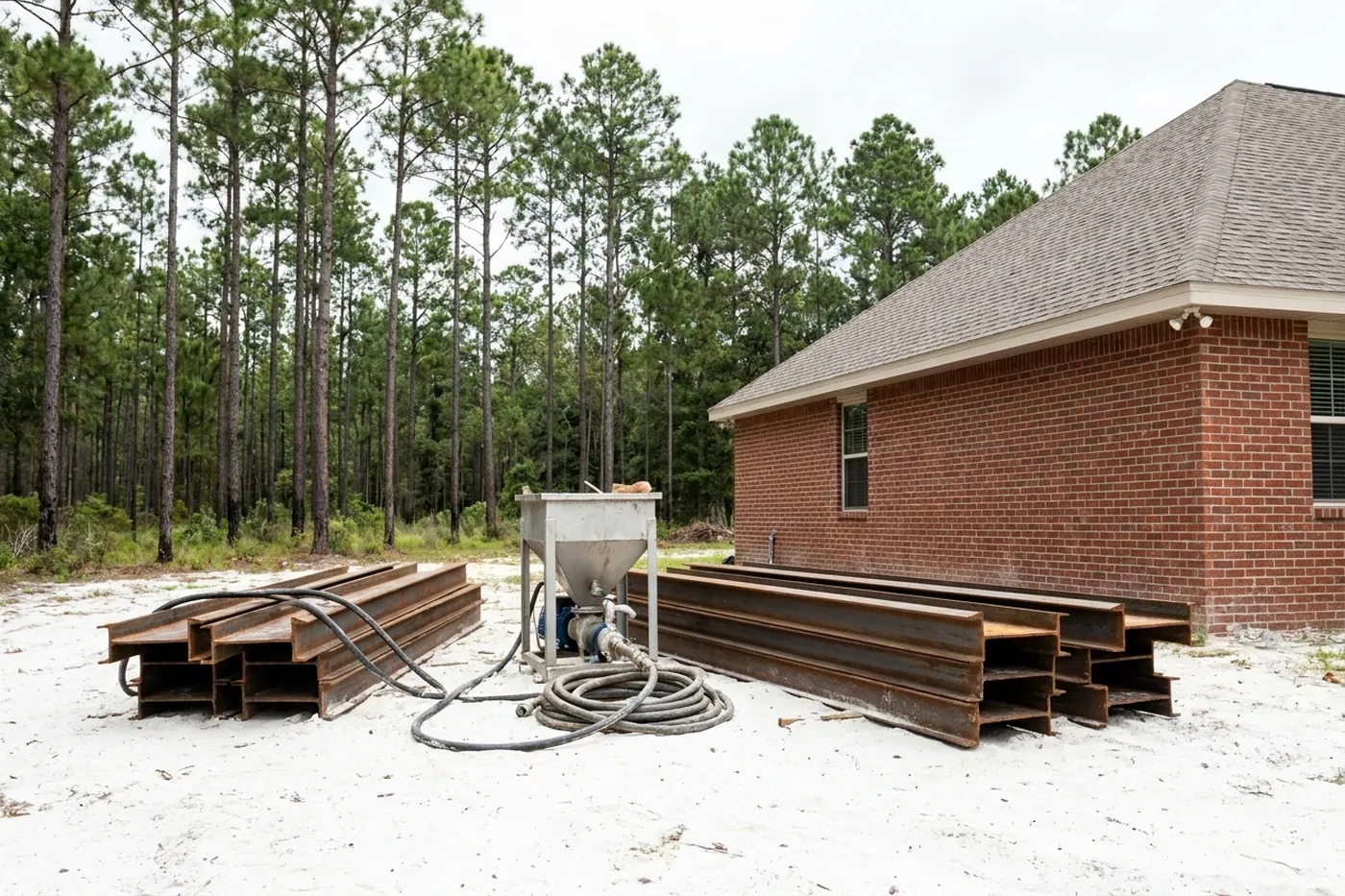
Either a flowable cementitious grout or a polyurethane foam depending on the cavity and what is above it. Foam is light and cures in minutes, grout is cheaper and heavier. On sand that has already failed to carry a load, the weight difference is a real consideration.
Will it wash out again?
Only if the water that removed the sand is still doing it. Filling a cavity without interrupting the flow that created it buys you a season or two. That is why a good scope prices the fill and the water correction together rather than separately.
Book a Pensacola foundation assessment
The most useful thing you can tell us is when it started, and whether anything happened around then — a named storm, a week of hard rain, a broken line, a neighbour regrading their lot. On sand, damage follows events rather than seasons, so a date is worth more here than a description. A local specialist who works in Pensacola will call you back.