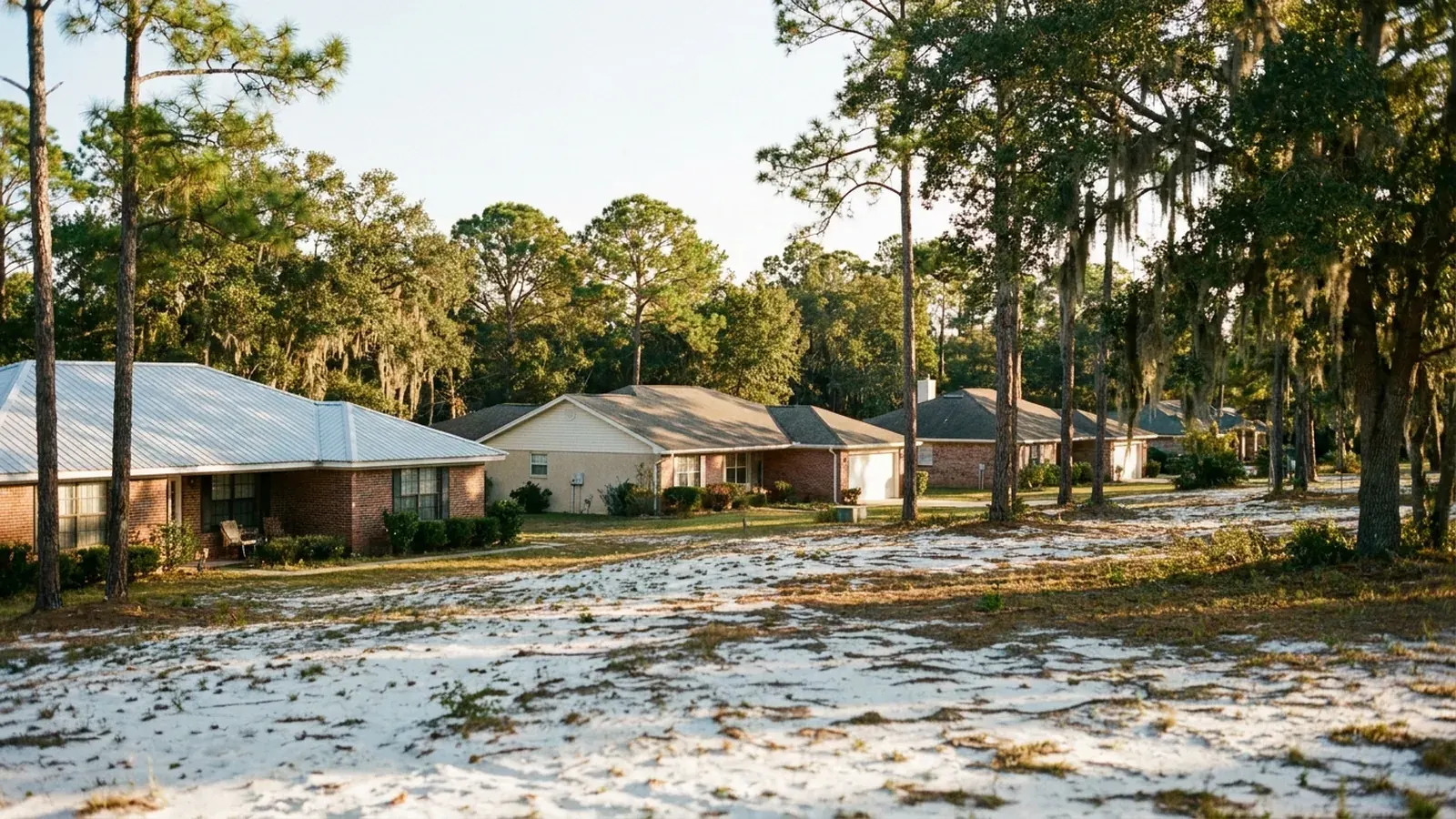
A good Pensacola foundation repair assessment takes 45–90 minutes and produces two figures: the pier count with a depth assumption, and the fill volume with an overage rate. No charge anywhere in Escambia or Santa Rosa.
What each number means, how they are established, and why a quote without both cannot be compared to another one.
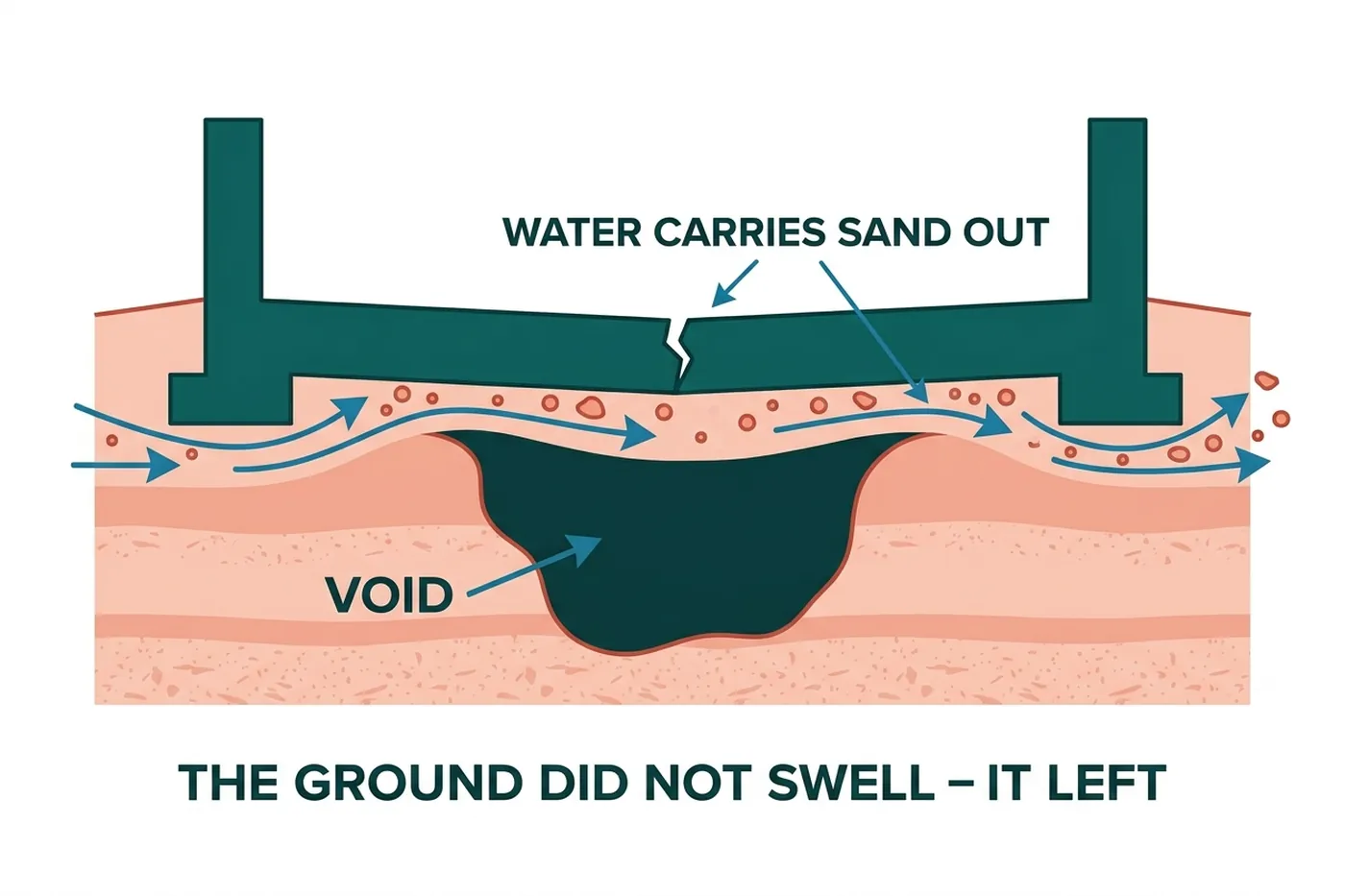
Number one: foundation repair support
How many piers, where, and to what assumed depth — with a written per-foot rate if the drive goes further. This is the number every foundation company produces, and on its own it describes a building being carried down to firmer ground.
It is established by reading how the structure sits: where it has dropped, by how much, and whether the pattern is confined to part of the footprint. Where nothing has actually moved, this number is zero, and saying so is part of the job.
Number two: fill
How much material has to go back, and at what rate beyond the assumption. This is the number most quotes here omit, and it is the one that separates a complete scope from a partial one.
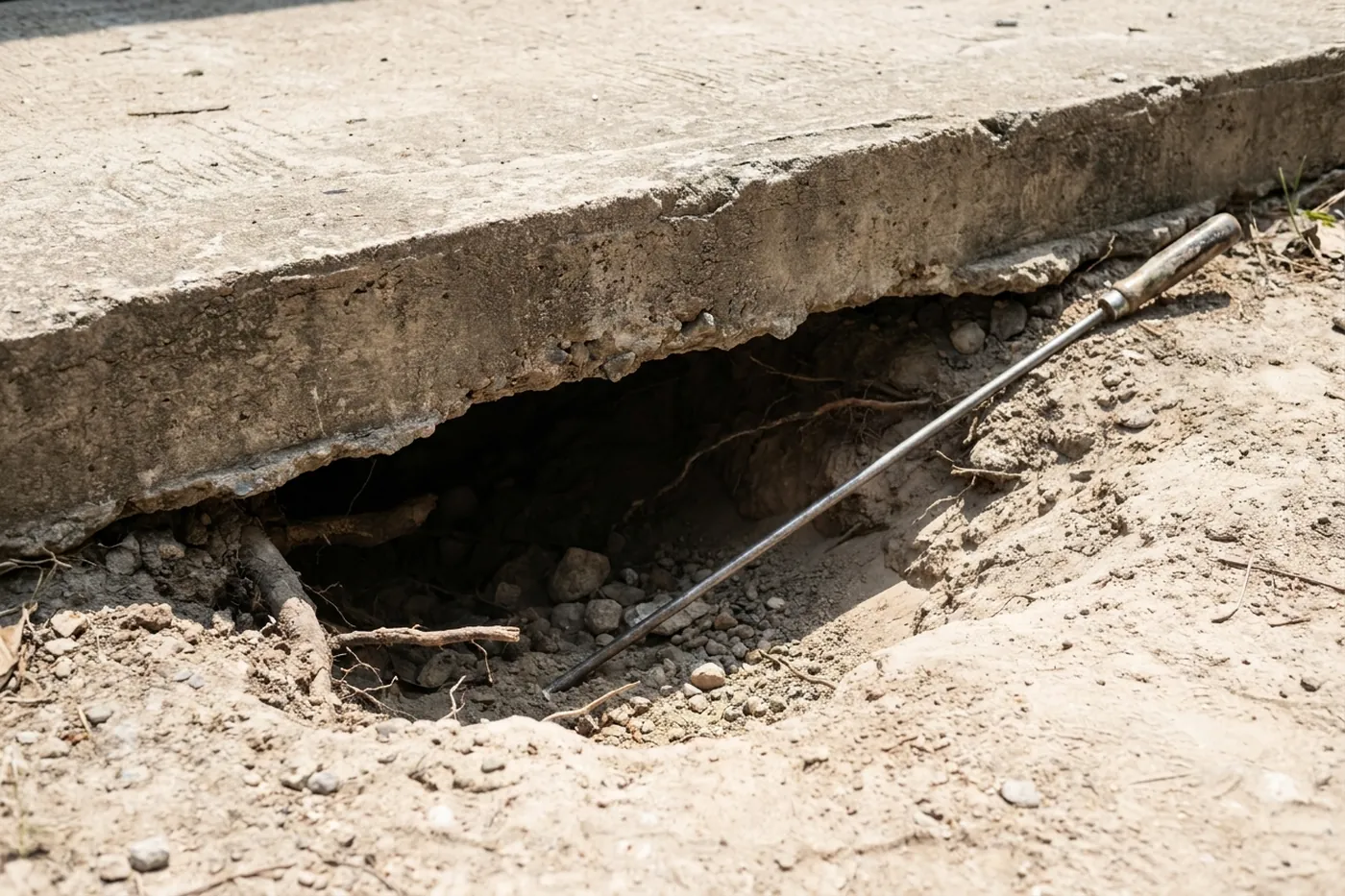
It is established by probing at the slab edge, sounding the floor for hollow areas, and test drilling where the extent is unclear. Those methods narrow it; they do not settle it, because a cavity ultimately accepts what it accepts. Which is exactly why the honest form is an assumption plus a rate.
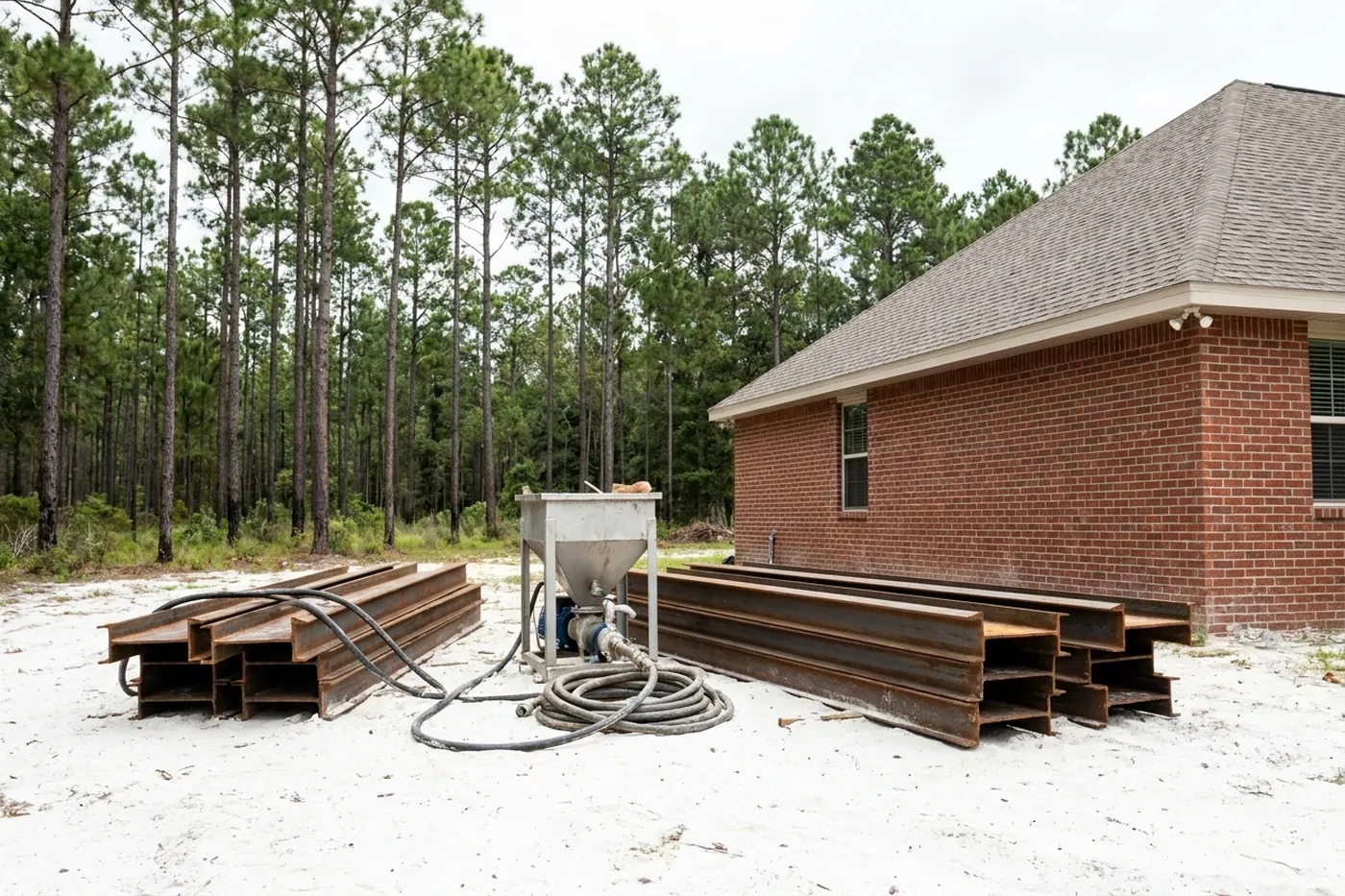
How a foundation repair assessment produces them
| Step | What it establishes |
|---|---|
| Walk and sound the floors | Where cavities are, mapped from above |
| Probe at the slab edge | Whether the void reaches the perimeter and how far in |
| Test drill where extent is unclear | Depth of the space at specific points |
| Read elevations across the footprint | Whether anything has actually dropped, or merely lost support |
| Walk the exterior water | The flow that caused it, and whether it is still running |
The fourth row is the one that decides whether number one is greater than zero. A slab still at elevation with a cavity beneath it needs filling, not piering — and that distinction is worth several thousand dollars.
What to ask for
- Both numbers, with their assumptions stated
- Whether erosion control is included, priced separately, or not required
- The lift target where lifting is proposed — fill only, or fill plus defined recovery
- An honest statement where the pattern does not fit washout and you need a geotechnical opinion instead
Bring another company's quote
Ask the specialist to read it against what they find. The specific thing to look for: does it say what happens to the space under the slab? On this coast that omission is the most common reason a repaired house moves again, and it is very difficult to notice without somebody pointing at it. There is no expectation you switch.
The assessment — the practical answers
What are the two numbers?
The pier count with its depth assumption, and the fill volume with its overage rate. On sandy ground a scope needs both, because support and replacement are separate problems. A quote carrying only the first has priced the half that is easier to itemise.
Why can't you just tell me the total?
The specialist can give one, but a total without those two numbers behind it cannot be compared to anybody else's total. Two honest quotes differing by thousands usually differ because one assumed a smaller cavity, and that is invisible until somebody states the assumption.
Is the first visit free?
Many local specialists don't charge for the first visit, but it depends on the company. Ask when the specialist calls, before they come out. Ask for the probing and sounding and the written scope as part of it.
How long does it take?
Forty-five to ninety minutes. Sounding the slab and probing at the edges is the slow part, and it is what produces the fill number, so it should not be rushed.
What if the cavity turns out bigger than assumed?
With a good scope, you pay the stated overage rate on the additional volume, and you knew that rate before work started. That is the entire purpose of writing the assumption down. A single set price on an unmeasured space either overcharges you or becomes a conversation nobody wanted mid-job.
Book a Pensacola foundation assessment
The most useful thing you can tell us is when it started, and whether anything happened around then — a named storm, a week of hard rain, a broken line, a neighbour regrading their lot. On sand, damage follows events rather than seasons, so a date is worth more here than a description. A local specialist who works in Pensacola will call you back.